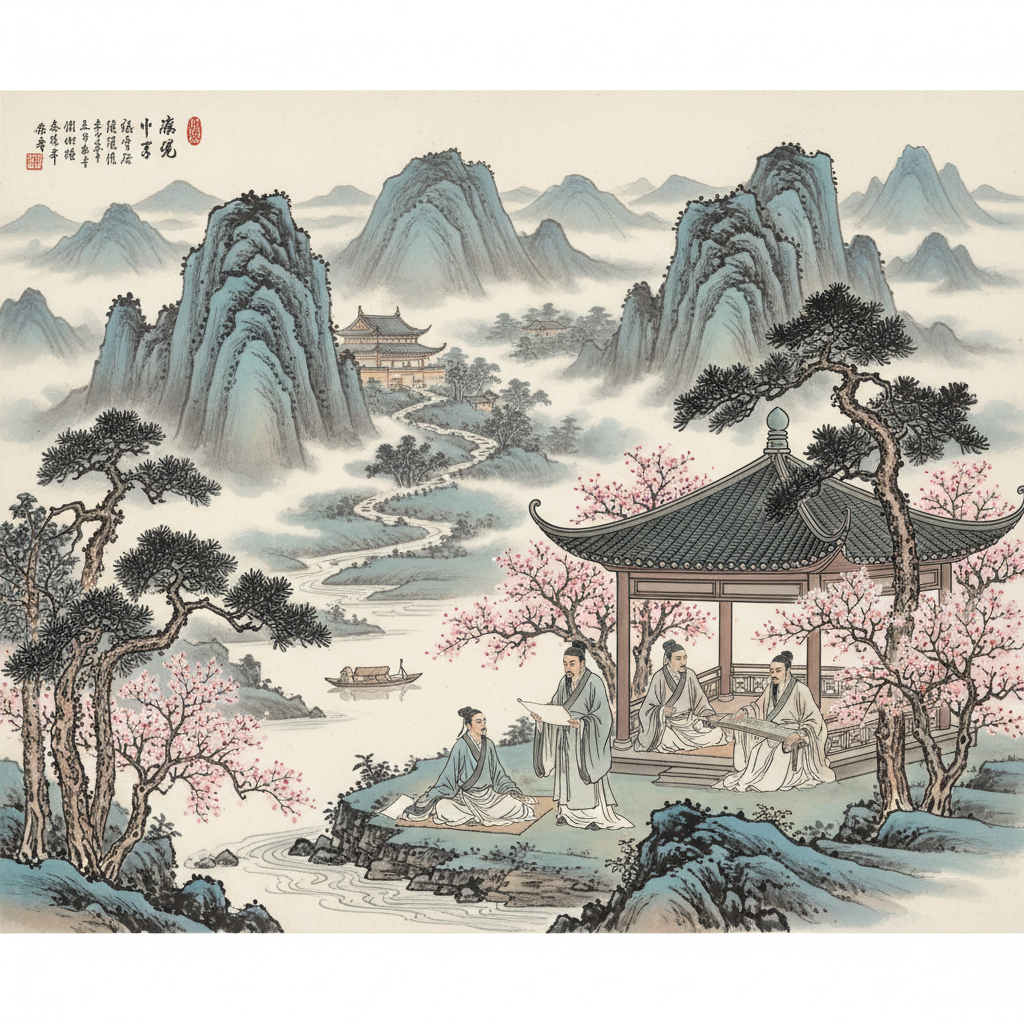
The Cultural Landscape of the Song Dynasty
The Song Dynasty (960-1279 AD) is heralded as a period of significant cultural and artistic development in China. This era marked a shift from the tumultuous warfare of prior dynasties to a more stable and prosperous society, allowing the arts and intellectual pursuits to flourish. The rise of commerce and urban centers contributed to an increased literacy rate, leading to a broader audience for poets. As individuals began to express their sentiments through lyrical forms, the Song Dynasty emerged as a vibrant hub of poetic innovation.
Notable Song Dynasty Poets
Several poets from the Song Dynasty have left indelible marks on Chinese literature. Among them, Su Shi (also known as Su Dongpo), Li Qingzhao, and Xin Qiji stand out for their distinct voices and thematic depth.
-
Su Shi: Regarded as one of China's greatest poets, Su Shi was not only a versatile writer but also an influential statesman. His poetry often bridges the personal with the political, utilizing vivid imagery that transports readers into his emotional landscape. His famous piece, "Red Cliff," reflects on the themes of nostalgia and the impermanence of life.
-
Li Qingzhao: As one of the first famous female poets in Chinese literary history, Li Qingzhao is celebrated for her poignant lyrics and uncanny perception of love and loss. Her contributions to the Ci (lyric poetry) genre are characterized by a deep emotional resonance and a unique engagement with nature, reflecting her inner turmoil and societal observations.
-
Xin Qiji: A poet and warrior, Xin Qiji infused his work with themes of patriotism and longing, articulating sentiments that echoed the socio-political landscape of his time. His intense and romantic style often contrasted with the delicate elegance seen in the works of his contemporaries.
The Poetic Forms and Techniques
Song poets employed a variety of poetic forms, the most notable being Ci and Shi. The Ci form, associated with song lyrics, allowed for greater emotional expression and musicality. Its distinctive structure often features irregular rhythms, promoting a fluidity that mirrors the complexities of emotion. An analysis of Li Qingzhao's verse exemplifies how the Ci form effectively conveys her feelings of grief and loss, making her work relatable across generations.
Conversely, the Shi form is characterized by its strict tonal patterns and regulated lines, which provide a structured approach to expression. Poets like Su Shi often interspersed his personal reflections with historical allusions, breathing life into traditional themes while weaving new narratives that captured the zeitgeist of the Song era.
Themes and Motifs in Song Poetry
The themes imagined by Song poets are rich and varied, often reflecting the social constructs and philosophies of the time. Common motifs include:
-
Nature: While nature in Song poetry is frequently a backdrop, it also serves a more profound purpose: evoking the inner emotions of the poet. Imagery relating to seasons changes, rivers, and landscapes often underscores themes of solitude and introspection.
-
Love and Longing: Central to the works of many Song poets is the exploration of romantic relationships. Li Qingzhao’s poignant reflections on lost love ring resonantly through her verses, capturing the bittersweet duality of affection and heartache.
-
Time and Transience: Many Song poets grapple with the passage of time and its effects on life and relationships. The fleeting beauty of moments becomes a recurring illustration in their works, revealing a philosophical depth that encourages readers to embrace the present while acknowledging life’s impermanence.
The Cultural Significance Today
The influence of Song Dynasty poets transcends their own historical context, continuing to inspire contemporary audiences and artists. Their merging of personal expression with communal themes offers timeless insights into human experience, creating a bridge between past and present. Schools across the globe study their works, not only for their artistic merit but also for their philosophical underpinnings.
Modern adaptations and interpretations of Song poetry can be seen in various forms of media, including music and visual arts, demonstrating the lasting power of these poets. Various collections and translations make their poignant reflections on the human condition accessible to new generations, ensuring that the legacy of Song poetry resonates well into the future.
Conclusion: The Enduring Legacy of Song Dynasty Poets
The Song Dynasty poets carved a distinct niche in the realm of Chinese literature, each bringing forth unique perspectives that continue to captivate today's readers. Through their masterful use of poetic forms, resonant themes, and rich imagery, poets such as Su Shi, Li Qingzhao, and Xin Qiji have created a timeless body of work that not only reflects their own lives but also speaks to universal truths that transcend time and culture. Engaging with their poetry allows us to appreciate the complexities of human emotion, forging a connection between past and present.