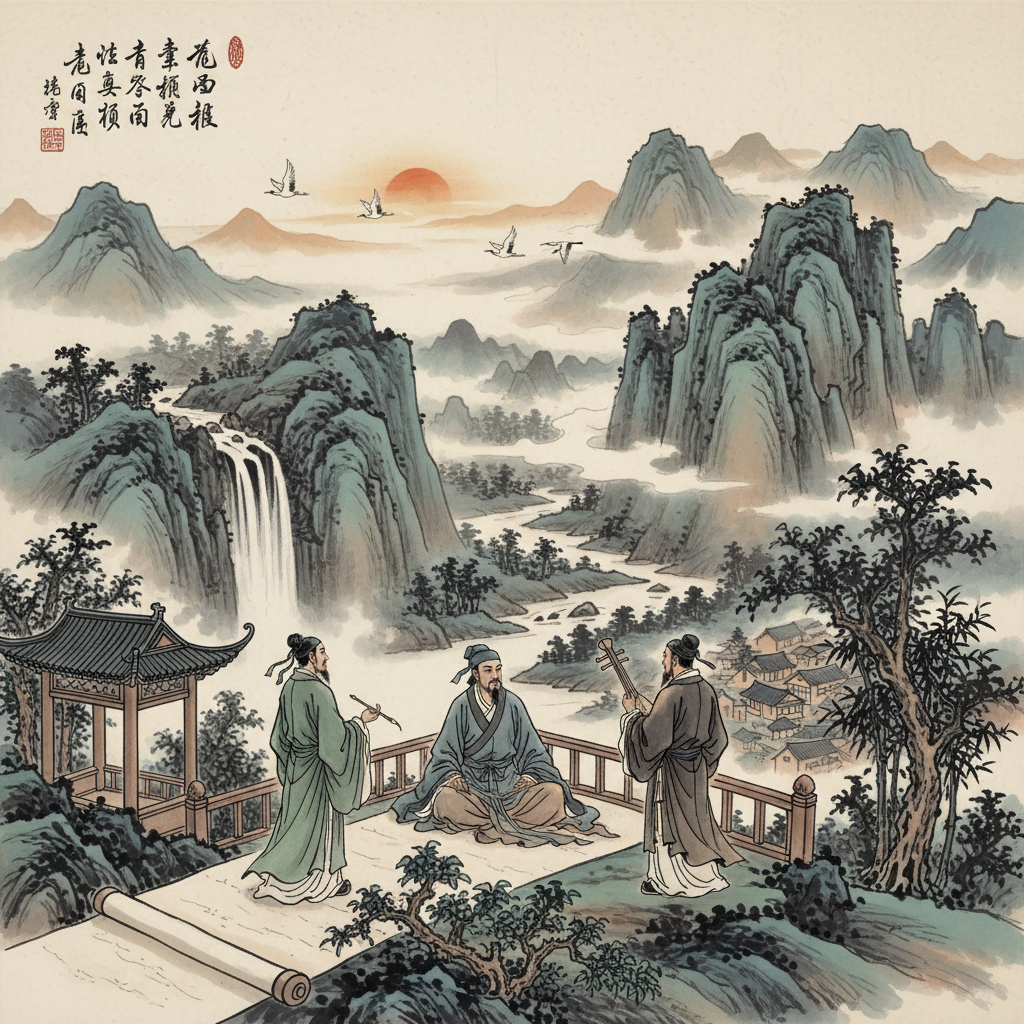
Introduction to Chinese Classical Poetry and Its Historical Foundations
Chinese classical poetry stands as a pillar of world literature, reflecting millennia of rich cultural heritage and literary finesse. Spanning numerous dynasties, poetry flourished as both an art form and a social practice, embodying the philosophical, political, and aesthetic sensibilities of its times. Among these, the Tang (618–907), Song (960–1279), and Yuan (1271–1368) dynasties represent particularly vibrant periods in the evolution of poetry and literary expression. This article delves into the unique characteristics and enduring significance of classical Chinese poetry, highlighting key poets and their contributions within these influential eras.
The Tang Dynasty: The Golden Age of Chinese Poetry
The Tang dynasty is often heralded as the “Golden Age” of Chinese poetry, producing some of the most revered poets in Chinese history. Tang poets perfected various poetic forms like shi, which emphasized regulated tone patterns and parallelism, and created unforgettable images and moods in concise verses.
Historical context plays a critical role: the Tang era was a period of political stability, economic prosperity, and cultural exchange via the Silk Road. This environment fostered poetic innovation and openness to diverse influences, reflected in the wide range of themes from romantic love and nature’s beauty to social critique and philosophical musings.
Prominent poets such as Du Fu and Li Bai encapsulate the genius of Tang poetry. Du Fu’s work, marked by a Confucian sense of duty and realism, often addressed social injustice and the hardships of war, while Li Bai’s poems delighted in spontaneity, Daoist themes, and the celebration of nature and friendship. Their contrasting styles demonstrate the dynamic breadth of Tang poetic expression and the era’s artistic vitality.
Song Dynasty Poetry: Complexity and Intellectual Refinement
Transitioning into the Song dynasty, poetry continued to thrive but also evolved. The political and cultural landscape shifted: the Song government placed greater emphasis on education and civil service examinations, fostering a class of scholar-officials who were also poets.
Song poetry, especially the ci lyric form, became more refined and emotionally complex, characterized by musical rhythm and intricate tonal patterns. Whereas Tang poetry often emphasized grandeur and vivid imagery, Song poets focused on subtle emotions, introspection, and daily life, reflecting a cultured but sometimes introspective society.
One notable figure, Su Shi (Su Dongpo), was renowned not only for his poetry but also for his essays and calligraphy. His poems are appreciated for their natural tone, wit, and philosophical depth, skillfully blending humor with melancholy. The Song dynasty poetical innovations laid foundations that influenced later Chinese literature and art.
Yuan Dynasty and the Rise of Yuan Qu: Poetry in the Age of Drama
The Yuan dynasty, established by the Mongol Empire, brought significant political upheaval but also new cultural forms. One distinctive literary development of this period was the Yuan qu (or zaju) popular song-drama, which integrated poetic lyrics with theatrical performance.
Yuan poets such as Guan Hanqing and Ma Zhiyuan excelled in creating concise lyrics that conveyed emotional intensity and narrative depth, often exploring themes of fate, love, and social constraints. Unlike the predominantly elite poetic culture of earlier dynasties, Yuan poetry reached a broader audience through public performances, marking an important democratization of literature.
This period’s poems and dramas also frequently grappled with the complexities of identity under foreign rule and shifts in cultural power, adding layers of historical resonance unseen in previous eras.
Literary Analysis: Themes, Imagery, and Form in Classical Chinese Poetry
Examining classical Chinese poetry through literary analysis reveals recurring themes such as nature, impermanence, friendship, political exile, and philosophical reflection. Symbolism plays a critical role; for example, the moon often represents longing or separation, while bamboo symbolizes integrity due to its resilience.
Formal elements such as tonal regulation, rhyme schemes, and parallelism contribute to the poetry’s musicality and balance. The regulated verse (jintishi) perfected during the Tang dynasty, with its strict tonal patterns and couplet structures, exemplifies the meticulous craftsmanship of Chinese poets.
Moreover, the interplay between content and form fosters rich layers of meaning, inviting multiple interpretations. Many poems employ allusions to classical texts or historical events, requiring readers to engage with a broader cultural context to fully appreciate their nuances.
Cultural Significance and Enduring Legacy
Chinese classical poetry not only shaped literary traditions but influenced painting, calligraphy, and philosophy across East Asia. Its emphasis on harmony between humanity and nature, emotional subtlety, and moral contemplation resonates deeply in Chinese culture.
Today, Tang, Song, and Yuan poets remain central figures in Chinese education and cultural identity. Their works are celebrated worldwide for their aesthetic beauty and universal themes, bridging ancient and modern sensibilities. Understanding their poetry offers valuable insight into the complexities of Chinese history, thought, and artistic achievement.
Conclusion
The exploration of Chinese classical poetry through the lens of Tang, Song, and Yuan poets reveals a rich tapestry of historical context, cultural evolution, and literary innovation. Each dynasty contributed distinct styles and themes, reflecting their unique social dynamics and artistic priorities. As a result, their poetic treasures continue to captivate scholars and poetry enthusiasts alike, underscoring the timeless power of Chinese literary art.