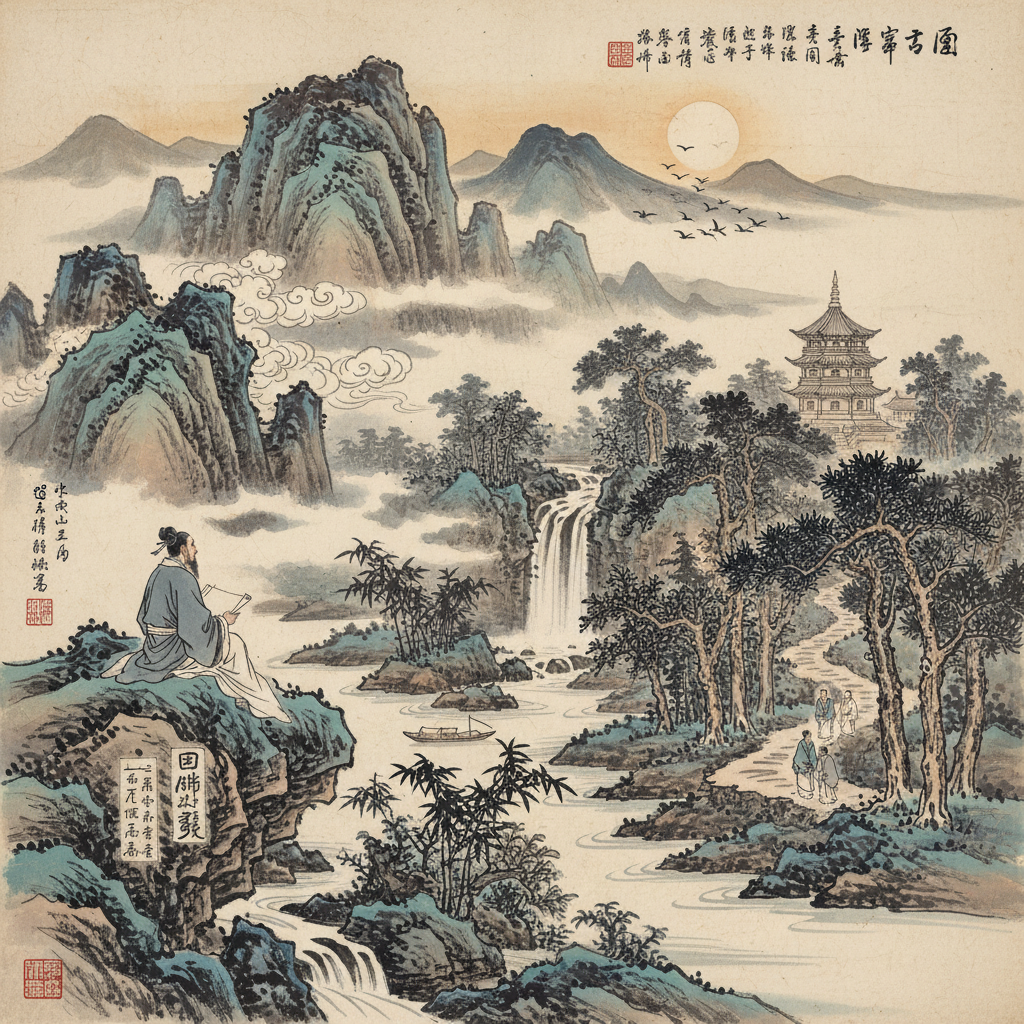
The Historical Context of Chinese Classical Poetry
Chinese classical poetry flourished during the Tang (618-907), Song (960-1279), and Yuan (1271-1368) dynasties, emerging as a reflection of the socio-political landscape, cultural evolutions, and philosophical advancements of the era. Known for its rich imagery, lyrical aesthetics, and mastery of form, this poetry serves not only as an artistic expression but also as a historical archive documenting the lives and thoughts of individuals who lived in these dynasties.
The Tang dynasty is often regarded as the golden age of Chinese poetry, marked by a prospering economy and an inclusive cultural exchange, which allowed poetry to grow in sophistication and reach. In contrast, the Song dynasty emphasized a more personal expression, often experimenting with vernacular language and forms, while the Yuan dynasty transitioned into folk influences and theatrical elements, giving rise to a more accessible poetic discourse. Understanding this historical context is vital to appreciating how these poets addressed the critical issues of their time through their craft.
Tang Dynasty Poets: The Luminaries of Chinese Poetry
The Tang dynasty birthed some of the most illustrious poets in Chinese history, including Li Bai and Du Fu. Li Bai, known for his romanticism, used nature as a metaphor for human emotions. His work exhibits exuberant imagery and a sense of spontaneity that continues to resonate with readers today. For example, his poem "Quiet Night Thoughts" evokes the universal feeling of homesickness through simple yet profound imagery of the moonlight.
Du Fu, on the other hand, represents a more somber and realistic approach. His poetry often reflects the hardships faced by the common people, incorporating political themes and societal critiques into his verses. In "Spring View," for instance, he poignantly captures the despair and destruction left by war. The juxtaposition of Li Bai's and Du Fu's styles illustrates the breadth of emotional expression within Tang poetry, revealing a rich tapestry of human experience.
Song Dynasty Innovation: A Shift in Style and Perspective
The Song dynasty witnessed a significant transformation in poetic form and themes. Poets like Su Shi and Li Qingzhao expanded the landscape of Chinese poetry, introducing a variety of lyrical styles (ci and shi) and focusing on personal and emotional themes. Su Shi, notable for his versatility, infused philosophical reflections into his poetry, intertwining nature with the human experience. His work not only captivates through its aesthetic beauty but also challenges readers to contemplate deeper meanings.
Li Qingzhao, considered one of the greatest female poets of the Song dynasty, showcased the nuanced feminine perspective especially through ci poetry, which allowed for exquisite personal expression. Her poignant exploration of love, loss, and longing reveals a profound, introspective quality, challenging the traditionally male-dominated literary scene. Such innovation marks a shift from grand historical narratives to intimate portrayals of the human condition, enriching the fabric of Chinese classical poetry.
Yuan Dynasty: The Blend of Folk Tradition and Poetry
The Yuan dynasty's poetry is distinctive for its incorporation of folk themes and the narrative tradition, reflecting the everyday lives of people alongside established literary conventions. Poets like Guan Hanqing and Ma Zhiyuan utilized colloquial language and theatrical influences, making poetry more accessible and resonant with the masses.
The form of zaju (variety plays) introduced during this period also featured poetry as an integral component, leading to the ascendance of performance poetry. Ma Zhiyuan's "Autumn Thoughts" is a fine example of how melancholic themes are interwoven with popular tones, encapsulating the transient beauty of life and the universal experience of longing. This democratization of poetry helped embed it deeper into the social fabric, allowing diverse voices to emerge, making literature accessible to those outside the elite cultural circles.
Literary Techniques in Chinese Classical Poetry
The mastery of various literary techniques is what sets Chinese classical poetry apart. From imagery and symbolism to parallelism and tonal variations, poets employed a repertoire of devices to enhance their expression. For instance, the use of parallelism fosters a rhythmic quality and deepens the meaning within couplets.
Furthermore, the seamless incorporation of allusions to historical figures, myths, and nature not only adds a layer of richness but also connects contemporary experiences to a broader cultural and historical context. Authors often relied on symbolism, such as the moon representing purity or nostalgia, allowing for multiple interpretations. Learning to appreciate these techniques not only enriches the reading experience but also reinforces the cultural significance of the poetry itself.
Conclusion: The Enduring Legacy of Chinese Classical Poetry
The legacy of Chinese classical poetry from the Tang, Song, and Yuan dynasties endures today, influencing contemporary literature and culture both within China and globally. As we immerse ourselves in the verses of poets like Li Bai, Du Fu, Su Shi, Li Qingzhao, and their peers, we gain insight into the complexities of human emotion, society, and the passage of time. This rich literary tradition, marked by its diverse styles and profound themes, continues to inspire creativity and appreciation for the art of poetry worldwide.