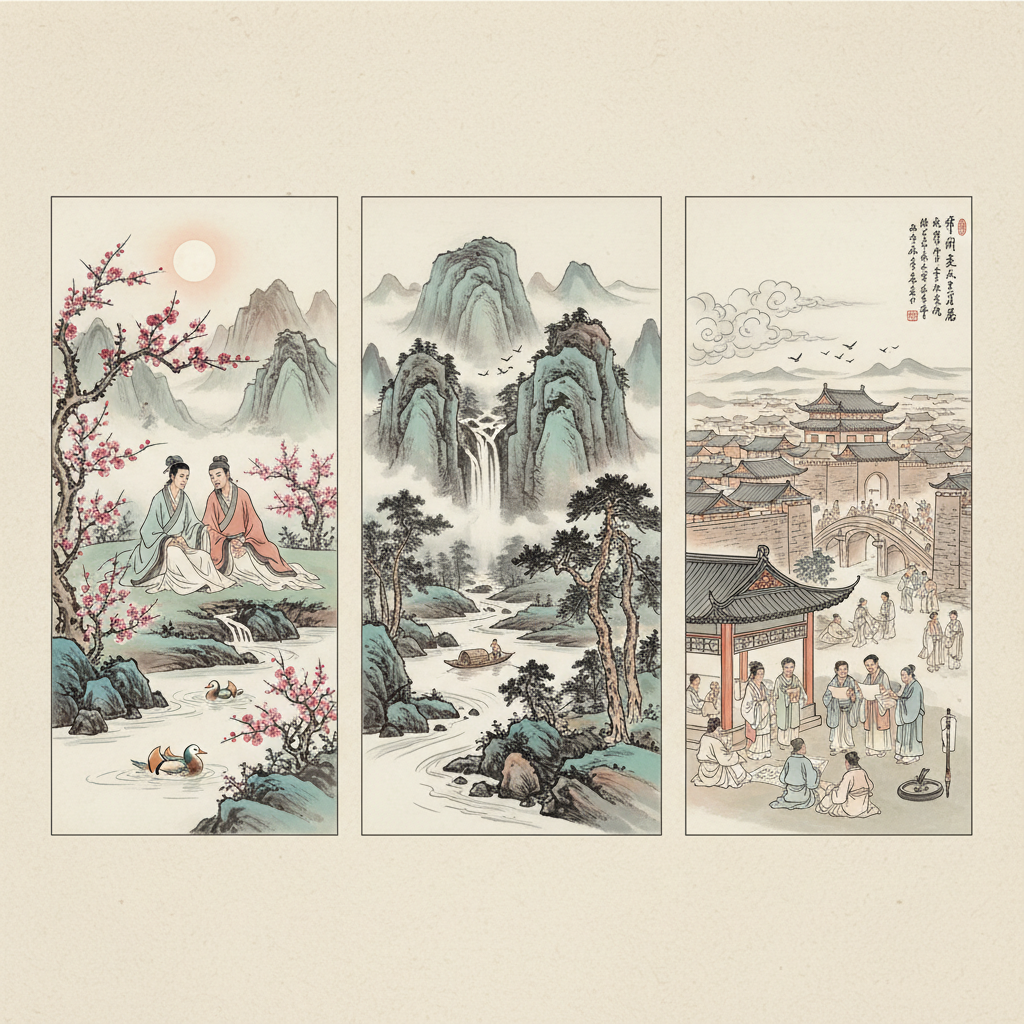
The Historical Context of Chinese Classical Poetry
Chinese classical poetry flourished during the Tang (618-907), Song (960-1279), and Yuan (1271-1368) dynasties, each era marking a distinctive evolution in style, themes, and cultural significance. The Tang dynasty is often regarded as the golden age of Chinese poetry, with an emergence of diverse poetic forms, such as the regulated verse (律詩, lǜshī) and the quatrain (绝句, juéjù). Key figures like Li Bai, Du Fu, and Wang Wei transformed poetry into a medium for personal expression, exploration of nature, and social commentary, setting a precedent for future generations.
The following Song dynasty saw the refinement of lyrical poetry, with poets like Su Shi and Li Qingzhao elevating the ci form, a type of lyric poetry with varying lengths and musical qualities. The Yuan dynasty brought about the zaju drama and distinct lyrical expressions through poets such as Guan Hanqing and Xin Qiji, showcasing a blend of artistic flair and societal reflection.
Love and Longing: Romantic Themes in Tang and Song Poetry
Central to the ethos of classical Chinese poetry are themes of love and longing, interwoven seamlessly with the natural world. Poets like Li Bai and Xu Zhimo encapsulated the emotions associated with love through vivid metaphors that often draw on nature’s beauty.
Li Bai's works, for instance, frequently convey not just personal feelings but also the larger philosophical implications of love and separation. The famous "Quiet Night Thought" (静夜思, jìng yè sī) evokes nostalgia through imagery of moonlight and dreams, reflecting a yearning for home and loved ones.
In the Song dynasty, poets employed the ci form to express complex emotional landscapes, often merging personal feelings with societal observations. Li Qingzhao, in her poignant works, explores love's fragility, blurring the line between personal sorrow and collective memory, thus enhancing the emotional depth of her poetry.
Nature and Its Symbolism: A Reflection of Inner Landscapes
Nature in Chinese classical poetry serves not only as a backdrop but also as a vital component of emotional expression. Poets extensively utilized natural imagery to reflect their inner emotions, beliefs, and philosophical musings.
Wang Wei, a paramount poet during the Tang dynasty, often integrated nature into his works, using landscapes to signify peace and transcendence. His notion of "pensiveness" (怅恨, chànghèn) resonates throughout his poetry, expressing deep introspection amidst serene natural settings. His famous line about the "mountains and rivers" conjures images of tranquility, inviting the reader to reflect on existence.
The Song dynasty poets intensified this nature motif, intricately linking personal emotions with the seasons. Su Shi’s portrayal of the moon and water symbolizes not just beauty but the impermanence of life and love, bridging personal experience with universal human truths.
Social Commentary and Historical Context in Yuan Poetry
Yuan dynasty poets often served as chroniclers and critics of societal transformations during a period of upheaval. The social hierarchy, political corruption, and cultural shifts provided rich material for poetic exploration.
Guan Hanqing, known for his theatrical contributions, utilized poetry to address social injustices and the plight of the common people. His works often reflect upon the complexities of human suffering, emphasizing empathy and moral responsibility within society.
Moreover, the ci poets, notably Xin Qiji, imbued their work with nationalistic fervor and reflection on the changing tides of political power. Their poetry serves as a testament to the resilience of the human spirit amid adversity, offering insights into loyalty, honor, and the pursuit of justice.
The Cultural Significance of Themes in Chinese Poetry
The themes of love, nature, and social critique resonate deeply within the fabric of Chinese cultural identity. Poetry became a medium through which emotions were articulated and historical narratives were shaped, emphasizing the interconnectedness of aesthetics and ethics.
During these dynasties, poetry was not solely an art form but also a vital component of education and civil service examinations, reinforcing its cultural prestige. The continued study of these themes in modern literature underscores their relevance, reminding contemporary audiences of the enduring power of the poetic voice.
Conclusion: The Enduring Legacy of Chinese Classical Poetry
Chinese classical poetry remains a vibrant testament to the themes of love, nature, and societal reflection. Through the lens of Tang, Song, and Yuan poets, we can glean insights into the human experience, revealed through the beauty of language and the depth of sentiment. The exploration of these themes offers not only a window into the past but also a source of inspiration for future generations, affirming the timeless nature of Chinese poetry.