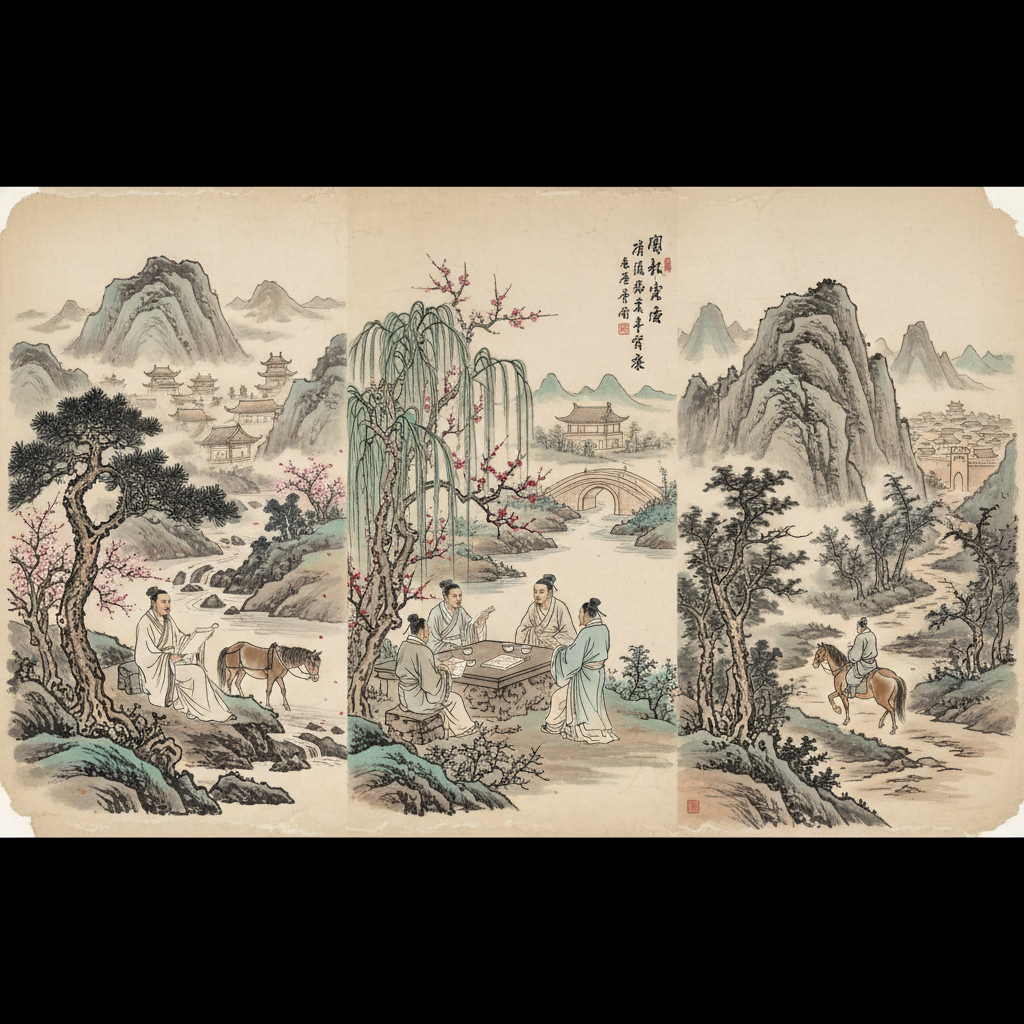
Introduction: The Timelessness of Chinese Classical Poetry
Chinese classical poetry, particularly from the Tang, Song, and Yuan dynasties, is celebrated for its linguistic beauty and thematic depth. The works of prominent poets from these periods, such as Li Bai, Du Fu, Su Shi, and Xin Qiji, offer profound insights into human experiences, nature, and society. By analyzing the recurring themes in their poetry, we can gain a greater understanding of the cultural nuances and historical contexts that shaped their creative expressions.
Historical Context: The Golden Ages of Poetry
The Tang dynasty (618–907) is often regarded as the pinnacle of classical Chinese poetry, marked by political stability and cultural flourishing. During this era, poets enjoyed a unique freedom of expression, leading to an explosion of creativity. The Song dynasty (960–1279) built upon this foundation, further refining the poetic form and introducing a more personal touch in thematic exploration. Lastly, the Yuan dynasty (1271–1368) contributed to the evolution of poetry through the integration of vernacular language and drama, reflective of its diverse cultural landscape.
Nature and Human Emotion: A Recurring Theme
A prominent theme in the works of Tang, Song, and Yuan poets is the relationship between nature and human emotion. Poets like Wang Wei and Li Bai masterfully used imagery from the natural world to evoke feelings of longing, solitude, and joy. For instance, Wang Wei’s poems often portray serene landscapes, echoing the tranquility of the soul amidst the chaos of life. Li Bai, on the other hand, uses nature as a backdrop for his emotions, allowing the reader to feel his intoxication with the beauty of the world while grappling with existential questions.
This intricate interplay between nature and emotion serves as a reminder of the human condition's fragility. In Du Fu's poetry, for instance, natural imagery is intertwined with expressions of despair and social concern, reflecting the turmoil of his times. The boundless landscapes of China reveal not only the physical beauty of the land but also the inner landscapes of the poets’ minds.
The Passage of Time: Impermanence and Transience
Another significant theme in classical Chinese poetry is the passage of time and the sense of impermanence. The cyclical nature of life, the changing seasons, and the fleeting moments of beauty are prevalent motifs throughout the works of Tang, Song, and Yuan poets. The concept of transience was particularly encapsulated in the term “du xiyu” (独醉于), which expresses an appreciation for ephemeral beauty.
Su Shi, one of the leading figures of the Song dynasty, often reflected on time’s relentless march through his poetry. His work emphasizes the importance of savoring the moment while acknowledging the inevitable passage of time. This theme resonates deeply within the cultural context of these dynasties, where the transient aspects of life were celebrated through festivals, lunar cycles, and seasonal changes.
Love and Yearning: The Complexities of Human Relationships
Love, yearning, and separation are profound themes that run through the poetry of the Tang, Song, and Yuan dynasties. Poets such as Li Qingzhao and Xin Qiji thoughtfully articulated the complexities of romantic relationships and the deep emotional resonance of longing.
Li Qingzhao's lyrical poetry exquisitely captures the pain of separation with her innovative use of metaphors, contrasting the beauty of love with the sadness of distance. Similarly, Xin Qiji’s work often explores themes of heroism tempered by love and loss, showcasing the duality of human experience. Through their verses, we witness the struggle between duty and desire, a timeless reflection that continues to resonate in today’s literature.
Social Commentary: The Poet as Observer and Critic
Apart from personal and emotional themes, many poets from the Tang, Song, and Yuan dynasties utilized their craft as a vehicle for social commentary. Du Fu, in particular, is renowned for his critical reflections on the social injustices of his time. His poetry serves not only as personal expression but also as a poignant critique of political corruption, war, and poverty.
The ability of poets to challenge societal norms and address pressing issues through their work highlights the significant role of literature in shaping public consciousness. This facet of Chinese classical poetry invites readers to engage with the text on multiple levels, allowing for both personal resonance and broader social awareness.
Conclusion: The Enduring Legacy of Chinese Classical Poetry
The themes explored in Chinese classical poetry from the Tang, Song, and Yuan dynasties reveal a rich tapestry of human experience, reflecting both individual emotions and collective societal concerns. Through their work, poets like Li Bai, Du Fu, Su Shi, and others have created enduring legacies that continue to inspire and provoke thought today. The intricate use of imagery, exploration of impermanence, and social commentary not only enrich our understanding of these poetic forms but also deepen our connection to the human experience across time and culture. As we delve deeper into these themes, we discover not just the beauty of the words, but also the profound wisdom and cultural significance that still resonates within our modern lives.