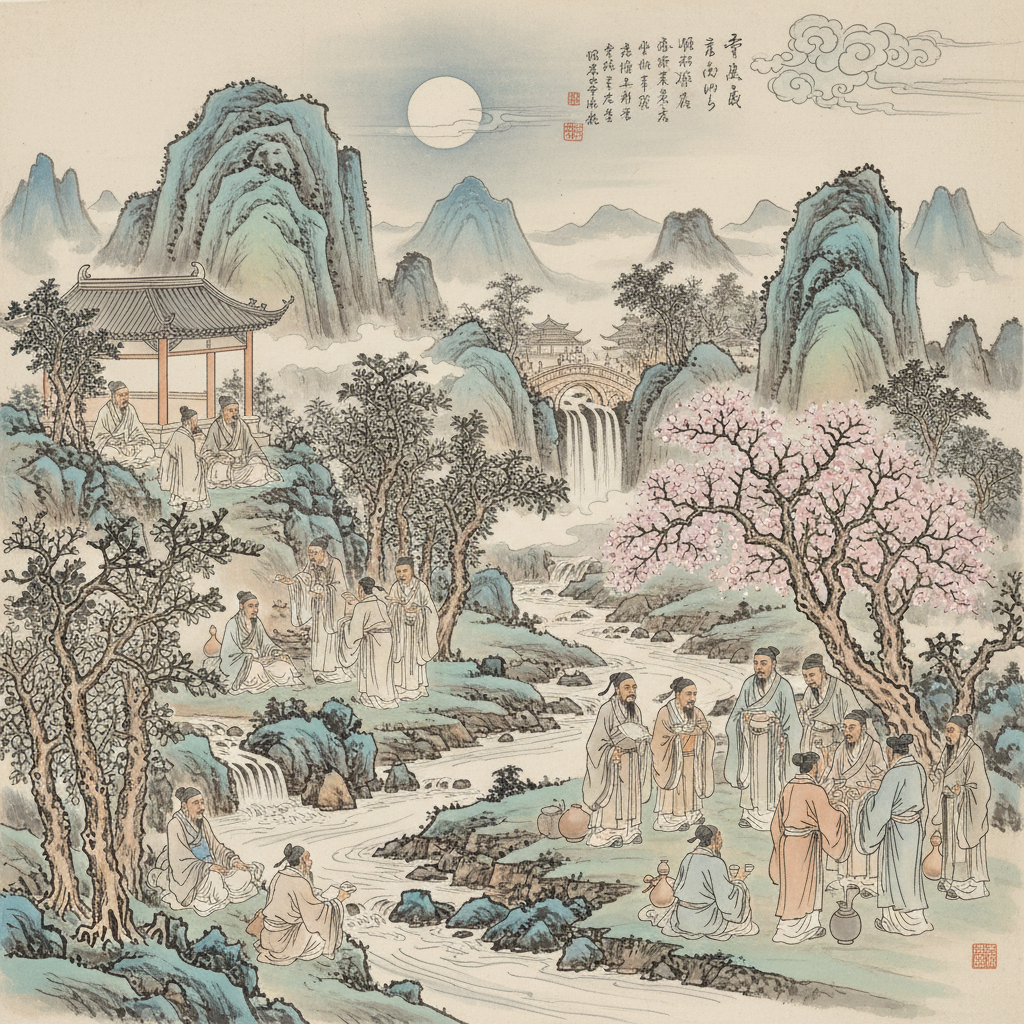
The Rich Tradition of Drinking Poetry in Chinese Literature
Chinese classical poetry is a treasure trove of lyrical expression, providing insights into the cultural, social, and historical tapestry of its time. Among its many themes, drinking poetry stands out for its blend of camaraderie and reflection. Spanning the Tang, Song, and Yuan dynasties, this sub-genre captures the essence of shared experiences, philosophical musings, and the poetic articulation of life's fleeting nature.
Historical Context: The Rise of Drinking Poetry
The Tang dynasty (618-907 AD) is often celebrated as the golden age of Chinese poetry. During this period, social gatherings, banquets, and seasonal festivals became the backdrop for poetic recitations. Notably, the act of drinking was not merely for indulgence but was intertwined with intellectual discourse and artistry. The Song dynasty (960-1279 AD) continued this tradition, elevating it with a more sophisticated cultural milieu. By the Yuan dynasty (1271-1368 AD), the mingling of performance art and poetry further enriched drinking poetry, as poets began to present their works in operas and public festivals.
This evolving context provided poets like Li Bai, Su Shi, and Xin Qiji with rich material to explore. Drinking scenes within their poems often serve as vehicles to explore deeper themes of existence, nostalgia, values, and the duality of joy and sorrow. The communal aspect of drinking fostered a unique atmosphere in which poetry could be shared and celebrated.
Cultural Significance of Alcohol in Poetry
Alcohol in ancient China had profound cultural significance, serving as a social lubricant and a symbol of friendship. In a society where hierarchy and formalities dominated interactions, drinking contests and banquets allowed for equal footing among participants. Poets used the imagery of wine and celebration to articulate both the beauty and the ephemeral nature of life.
Li Bai, perhaps the most prominent drinking poet of the Tang dynasty, famously depicted wine as a catalyst for inspiration, creating a bridge between the mundane and the ethereal. His poem “Drink Alone” (月下独酌) captures the essence of solitude and companionship through wine, celebrating the beauty found in both the company of friends and the reflective moments of solitude.
The Artistic Techniques: Imagery and Symbolism
Drinking poetry is characterized by its rich imagery and symbolism. Poets often employed vivid descriptions that invoked the senses, turning simple acts of drinking into elaborate scenes laden with emotional weight. For instance, the sight of a cup filled with wine could symbolize the transient joys of life, while the act of raising a glass might evoke camaraderie and shared human experience.
Su Shi’s poetry embodies this technique, where the act of drinking acts as a lens for contemplating nature and existence. In “The Red Cliff,” he uses wine not only as a catalyst for inspiration but also as a metaphor for reflecting on the passage of time. The imagery of flowing water mirrors the inescapability of temporal change, underscoring the bittersweet nature of life — a recurring theme in drinking poetry.
Key Poets and Their Contributions
Among the celebrated poets of the Tang, Song, and Yuan eras, a few stand out for their contributions to drinking poetry:
-
Li Bai (701-762 AD): Often referred to as the "Immortal Poet," Li Bai’s eloquent verses extol the joys of wine and fellowship. His exuberant style and profound insights into life and nature have left an indelible mark on Chinese literature.
-
Su Shi (1037-1101 AD): A multifaceted poet, Su Shi was not only a prominent drinking poet but also a calligrapher and statesman. His works delve into the philosophical dimensions of drinking, often employing complex imagery to convey deeper meanings.
-
Xin Qiji (1140-1207 AD): A poet of the Song dynasty who artfully blended martial themes with drinking poetry, Xin’s works are marked by a unique intensity. His ability to explore personal emotions within the larger spectrum of national identity makes his poetry resonate with readers.
Infusing Modernity: Drinking Poetry Today
Today, the legacy of drinking poetry continues to resonate within contemporary Chinese culture. Modern poets draw from classical traditions while infusing their personal voices and contemporary experiences, bridging the past with the present. The communal essence of drinking poetry remains an enduring aspect of social gatherings, ensuring that the conversations and reflections inspired by wine continue to flow.
In conclusion, the evolution of drinking poetry throughout the Tang, Song, and Yuan dynasties illustrates the rich interplay between social customs and artistic expression in Chinese literature. Through the words of iconic poets, we grasp not only the aesthetic beauty of their works but also the profound insights into human nature and the passage of time that they encapsulate. As we raise a glass to these timeless verses, we celebrate the enduring spirit of connection, reflection, and artistry they inspire.