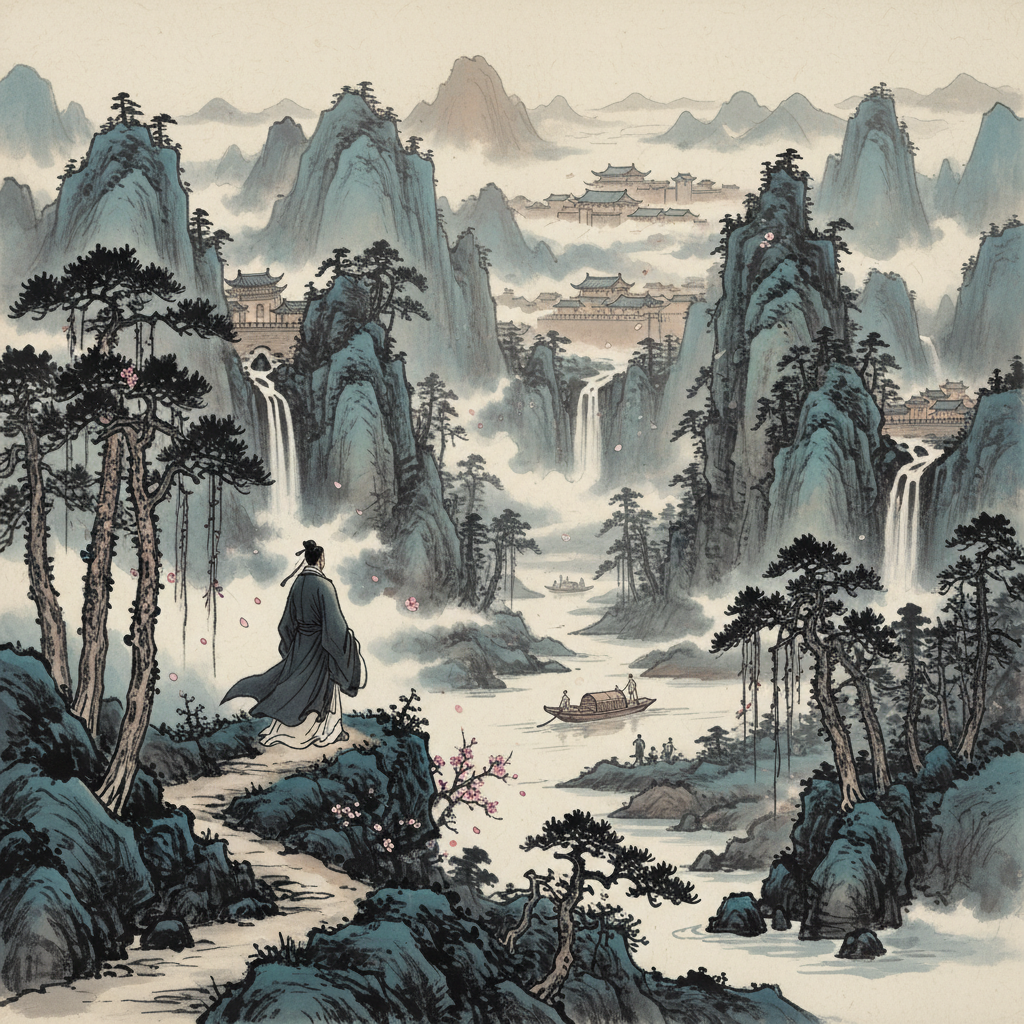
The Context of Exile in Chinese Classical Poetry
Exile has long been a poignant theme in Chinese classical poetry, particularly during the Tang (618-907 AD), Song (960-1279 AD), and Yuan (1271-1368 AD) dynasties. The societal and political landscapes during these times led to numerous poets being exiled, either as a consequence of political dissent or as a result of failure in the imperial examinations. This state of dispossession nurtured a distinctive poetic voice, where themes of longing, nostalgia, and solitude became profoundly resonant.
In the Tang dynasty, for instance, the societal fragmentation caused by war and political intrigue made the experience of exile not just a personal trial but a shared cultural reality. Poets turned their woes into verses that captured their lives' complexities, allowing literature to flourish amidst adversity. The subsequent Song and Yuan dynasties continued this tradition, enriching it with deep philosophical reflections on existence and place.
Poetic Giants: Tang Poets and Their Exile Experiences
The Tang dynasty birthed some of the most celebrated poets in Chinese literature, many of whom faced exile. Among them was the legendary Li Bai, known as the "Immortal Poet," whose works often reflect the tumult of his life experiences—including his being exiled due to political rivalry. His poetry artfully intertwines themes of loneliness and alienation, illustrated beautifully in his poem “Quiet Night Thought” where he longs for home and experiences profound homesickness.
Another figure, Du Fu, remains a voice of deep empathy and social conscience during turbulent times. His experiences of displacement are encapsulated in poems like “Spring View.” Du Fu's poignant verses explore loss and hope amid personal and societal ruin, reflecting the heavy toll of exile. These poets transformed their pain into artistic expression, giving voice to their sorrow while simultaneously enriching the poetic landscape of their time.
Song Dynasty Poets: The Duality of Solitude and Reflection
The Song dynasty saw a unique evolution in the style and themes of poetry, with a heightened emphasis on personal emotion and moral introspection. Poets such as Su Shi, known for his versatility and wit, eloquently depicted the duality of solitude and reflective thought stemming from exile. His works often convey a deep sense of longing and the stark beauty of nature, serving as a backdrop for his internal struggles.
In “On the Red Cliffs,” Su Shi not only reflects on his feelings of isolation but also philosophizes on the permanence of nature against the transient nature of human emotions. The dual reflections encourage readers to contemplate their relationship with their surroundings, capturing the essence of the Song dynasty’s approach to poetry. The notion that beauty and pain coexist resonated deeply during this era, marking a significant shift in the understanding of emotional expression in Chinese literature.
The Yuan Dynasty: A Time of Transformation
The Yuan dynasty, ushered in by the Mongol Empire, posed unique challenges to Chinese poets. The artistically rich environment facilitated cultural exchanges that transformed the literary landscape. One of the prominent figures from this period was Jiang Shun, whose poetry encapsulated the existential angst of exile. In his works, the underlying themes of loss were often couched in a broader commentary on the instability of life.
This era gave rise to the “Zaju” form of drama, which further intertwined poetic expression with storytelling. Poets used their voices to narrate personal and collective experiences of dislocation, using the thematic nuances of exile not just as personal lamentation but as a reflection of the broader geopolitical shifts. These narratives acknowledged the inherent struggles while also celebrating resilience and the enduring spirit of creativity amid strife.
The Cultural Significance of Exile Poetry
The culture surrounding exile poetry in the Tang, Song, and Yuan periods goes beyond individual suffering. It showcases a collective memory of displacement and resilience, defining the era's literary identity. In addressing themes of longing, nostalgia, and loss, these poets contributed to a cultural dialogue that penetrated beyond their contemporaries, influencing subsequent generations.
Additionally, the exploration of nature as a metaphor for emotional states, particularly in the works of poets like Wang Wei, embedded deeper cultural meanings. Nature often served as a refuge, reflecting the inner turmoil of the poet while inviting readers to connect with their sentiments on a personal level.
Conclusion: The Enduring Legacy of Exile in Chinese Poetry
The poignancy of exile in Chinese classical poetry remains ever relevant today. Tang, Song, and Yuan poets infused life’s complexities into their work, shaping a rich tapestry of emotional exploration that transcends time and place. Their verses not only captured personal strife but also spoke to universal experiences of loss and yearning.
As contemporary readers engage with these poetic legacies, they find reflections of their own existential queries amidst the soulful expressions of solitude and longing, making these poems eternally resonant. The exploration of exile in poetry remains an essential lens through which to understand not just the past but the modern human condition, underscoring the timeless nature of poetic expression.