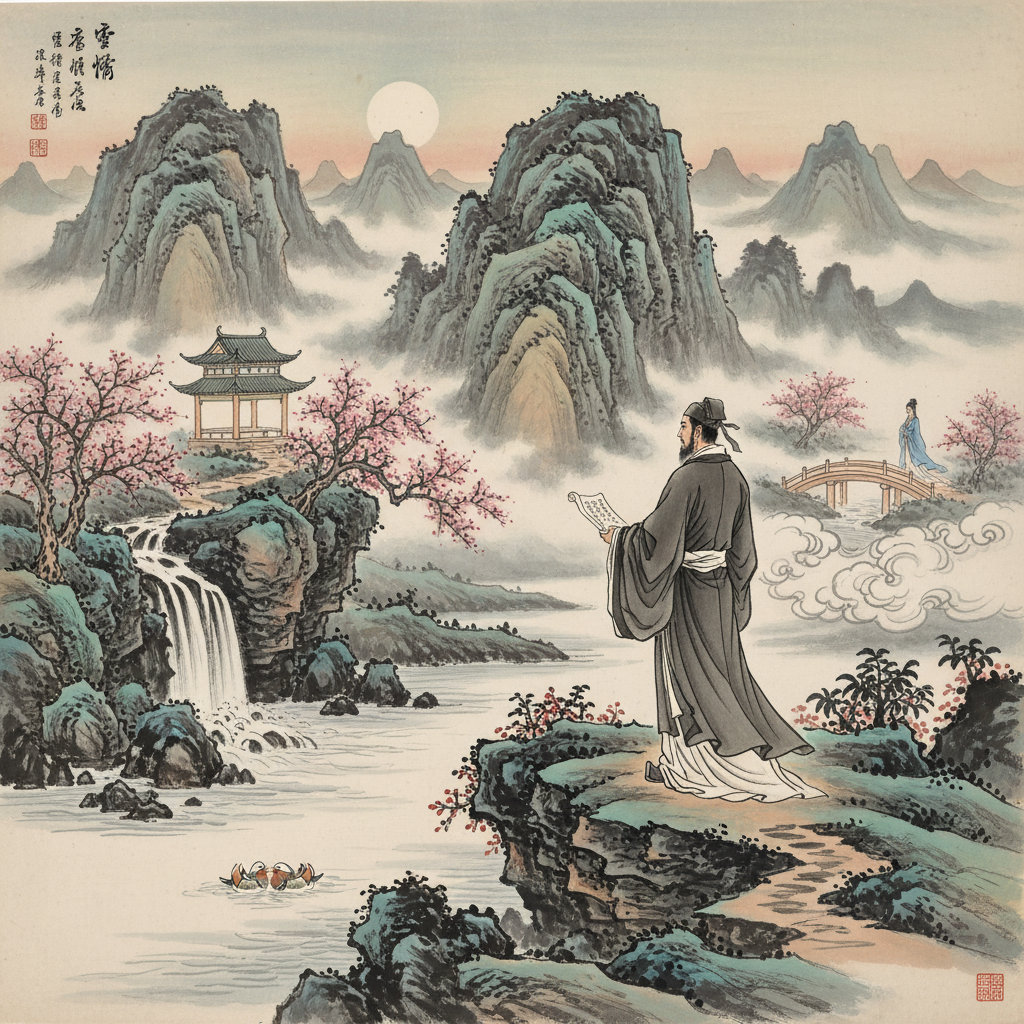
Introduction: The Timeless Essence of Love in Chinese Classical Poetry
Love poetry has been a profound and enduring theme in Chinese classical literature, especially during the Tang (618–907), Song (960–1279), and Yuan (1271–1368) dynasties. These periods not only witnessed political upheavals and cultural florescence but also gave rise to some of China’s most beloved poets, whose verses on love communicate universal emotions with elegance and depth. This article delves into the cultural and historical contexts of love poetry across these dynasties, highlighting notable poets and offering a literary analysis of how love and longing are expressed in their works.
Historical Background: Love Poetry Amidst Dynastic Flourishing and Change
During the Tang dynasty, often considered the golden age of Chinese poetry, the imperial court and aristocratic society cultivated a vibrant cultural milieu where poetry thrived. Romantic love, passion, and sorrow were depicted with exquisite imagery, often intertwined with nature and seasonal metaphors. The Song dynasty, by contrast, saw a transition in poetic forms and themes, reflecting a more personal, introspective, and sometimes melancholic approach to love amid socio-political upheaval and shifting intellectual trends. Meanwhile, the Yuan dynasty’s rise of qu (lyric drama) introduced fresh styles and voices, with new expressions of romantic longing emerging in a culturally hybridized society under Mongol rule.
The evolution from Tang to Yuan frames a broader narrative about how Chinese poets adapted the theme of love to resonate with their times while preserving a classical poetic heritage.
Tang Dynasty Love Poetry: Passion and Elegance in the Writings of Li Bai and Du Fu
Li Bai and Du Fu, towering figures of Tang poetry, approached love with contrasting sensibilities. Li Bai’s poetry often centers on impassioned, carefree expressions of romantic desire—his verses filled with vivid imagery, bold metaphors, and a spontaneous spirit. For example, his famous poem "Quiet Night Thoughts" (静夜思), while ostensibly about homesickness, is suffused with a tender longing that parallels romantic yearning.
Du Fu, known for his moral seriousness and social commentary, depicted love more soberly, often intertwined with themes of loss, separation, and the ravages of war. His poetry reflects the tension between personal affection and public duty, painting a complex emotional landscape.
Both poets, through their mastery of regulated verse (lüshi) and fu (rhapsody), pushed the boundaries of how romantic emotions could be articulated within the stringent poetic forms of their time.
Song Dynasty: Su Shi and Li Qingzhao’s Intimate and Melancholic Love Poetry
The Song dynasty elevated the ci form—lyric poetry set to musical patterns—to new heights, making it especially suited for exploring nuanced emotions like love and longing. Su Shi (Su Dongpo), one of the era’s most creative minds, infused his ci poetry with a blend of humor, tenderness, and philosophical insight. His poems frequently explore love’s ephemeral nature and the intersection of personal loss with broader existential reflection.
Li Qingzhao, arguably China’s greatest female poet, revolutionized love poetry by foregrounding female subjectivity. Her ci express profound grief and the bittersweet remembrance of past love, notably in lines that convey fragile beauty and the passage of time. Her work is renowned for its emotional intensity and lyrical precision, offering a vital voice that enriches the Song love poetry tradition.
Yuan Dynasty Love Poetry: Qu Drama and the Poetic Voice of Guan Hanqing
The Yuan dynasty introduced the qu form—a new kind of lyric drama that democratized poetic expression and infused theatrical elements into literary culture. Guan Hanqing, one of the most celebrated Yuan dramatists and poets, crafted qu lyrics that vividly depicted romantic passion, separation, and social obstacles to love.
Yuan qu often portrayed the lives of ordinary people and featured dialogue-like verse that both conveyed emotional immediacy and painted social realities. Love poetry in this period became more performative and accessible, reflecting the dynamic urban culture of Yuan China and signaling a shift from aristocratic refinement toward popular appeal.
Literary Analysis: Imagery, Symbolism, and the Poetics of Longing
Across these dynasties, love poetry thrives on symbolic imagery—flowers like peonies or plum blossoms, the moon, spring and autumn landscapes, and seasonal shifts serve as metaphors for beauty, desire, separation, and renewal. The tension between presence and absence, union and parting, infuses the poetry with a melancholic beauty.
Moreover, the regulated use of tone patterns, rhyme, and parallelism heightens emotional resonance, while the interplay of direct and indirect expression allows for layered readings. This subtlety enables poets to balance culturally sanctioned restraint with heartfelt intimacy. The ci form’s musicality further deepens emotional expression, capturing the cadence of human longing in a way that resonates across generations.
Conclusion: The Enduring Legacy of Chinese Classical Love Poetry
The love poetry of the Tang, Song, and Yuan dynasties remains a cornerstone of Chinese literary heritage, offering timeless insights into human emotion and artistic expression. From Li Bai’s exuberance and Du Fu’s gravitas to Li Qingzhao’s poignant lyricism and Guan Hanqing’s dramatic innovations, these works reflect an ongoing dialogue between personal feelings and cultural aesthetics. Their poems continue to inspire readers worldwide, illustrating that while languages and eras change, the universal themes of love and longing endure in the heart of Chinese classical poetry.