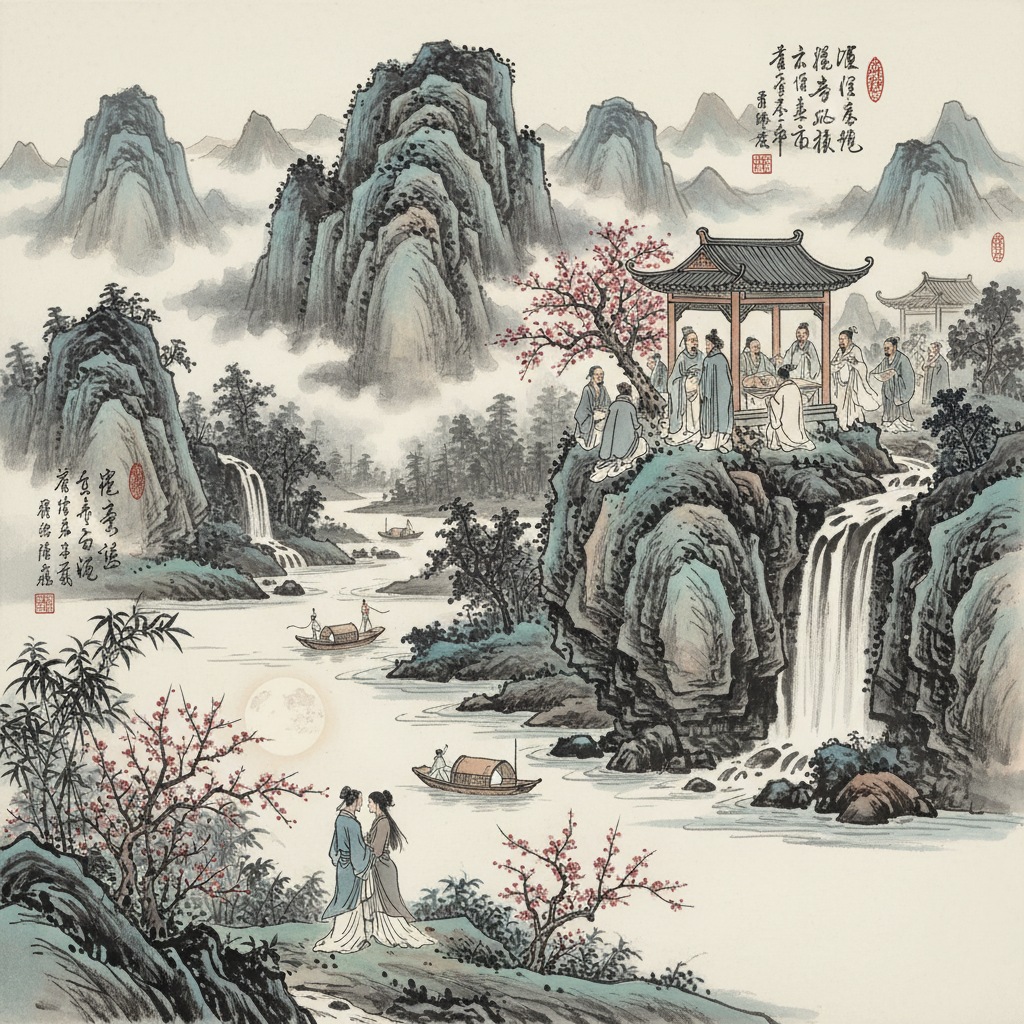
Introduction: The Enduring Legacy of Love in Chinese Classical Poetry
Love has been a timeless theme in Chinese classical poetry, capturing the complexities of human emotion through vivid imagery, symbolism, and refined artistry. From the flourishing Tang dynasty to the literary innovations of the Song and Yuan periods, love poetry evolved in style and substance, reflecting cultural values and social norms of its era. This article delves into the historical context, cultural significance, and literary techniques of love poetry in these three pivotal dynasties, illuminating how poets articulated love’s joys, sorrows, and mysteries.
Historical Context: Love Poetry in the Tang, Song, and Yuan Dynasties
The Tang dynasty (618–907) is often regarded as the golden age of Chinese poetry. Poetry was not only an art but an essential part of elite culture and governance. Amidst political stability and cosmopolitan openness, themes of love—ranging from youthful romance to lamentations of separation—became richly nuanced. Poets like Li Bai and Du Fu, although known for broader themes, also expressed personal emotions in their verses.
Following the Tang, the Song dynasty (960–1279) witnessed shifts in society with the rise of a literate bureaucratic class and changing gender roles. The ci lyric form flourished, becoming the primary medium for intimate and lyrical expression of love. Song poets captured subtle emotional states and the bittersweet nature of relational dynamics, often drawing on everyday experiences and natural imagery.
The Yuan dynasty (1271–1368), marked by Mongol rule and cultural synthesis, encouraged new theatrical forms such as the sanqu lyric. Love poetry in the Yuan period often intersected with drama and song, exhibiting a more direct and sometimes humorous take on romantic relationships, social convention, and personal yearning.
Cultural Significance: Love as a Mirror of Society and Emotion
Love poetry in classical China reflects not just personal sentiment but profound cultural ideals and dilemmas. Confucian values emphasized family harmony and social propriety, which poets both honored and questioned in their depictions of romance. For instance, many poems grapple with separation caused by political duties or social constraints, highlighting love’s tension with societal expectations.
Moreover, love poetry served as a conduit for exploring fleeting beauty, the passage of time, and existential longing. The use of nature metaphors—such as blooming flowers, changing seasons, and the moon—imbued love poems with symbolic layers that spoke to universal human experiences beyond individual affairs. These cultural resonances have allowed classical love poetry to persist as a treasured legacy.
Tang Dynasty Masters of Love Poetry: Li Bai and Bai Juyi
Li Bai, famed for his romantic flair and cosmic imagery, brought a spirited intensity to love poetry. His verses often celebrate love’s exhilaration and the longing it inspires, using vibrant imagery like flowing rivers and soaring birds to evoke emotional freedom. One famous example is his poem expressing yearning during a moonlit night, where separation becomes a shared cosmic experience.
Bai Juyi, by contrast, offered a more accessible and narrative-driven style. His poems frequently portray the realities and trials of love, including unfulfilled desires and heartbreak. Bai’s emphasis on plain language and empathy connected deeply with a broad audience, making him a pivotal figure in popularizing love poetry beyond aristocratic circles.
Song Dynasty’s Ci Poetry: Li Qingzhao and Su Shi’s Intimate Expressions
The Song dynasty popularized the ci form—lyric poems set to musical patterns—perfectly suited to capturing intimate and nuanced feelings of love. Li Qingzhao, one of the most celebrated female poets of the era, infused her ci with poignant reflections on love and loss, often highlighting the fragility of happiness and memory. Her work blends personal history with universal sorrow, striking a delicate emotional chord.
Su Shi (Su Dongpo), a polymath poet and statesman, employed the ci form to express both romantic devotion and philosophical musings on love’s complexities. His love poems reveal spirited playfulness alongside moments of melancholy, underscoring the multiplicity of love’s experience. The ci’s adaptability allowed Song poets to explore subtle psychological shifts and the interplay between hope and despair.
Yuan Dynasty’s Dramatic and Song Influences: Love in Sanqu and Zaju
During the Yuan dynasty, love poetry intersected with popular theater forms like zaju, blurring boundaries between poetry and performance. Sanqu, a less rigid lyric form, gave poets flexibility to address love with humor, irony, and directness. Yuan dramatists often depicted love across social classes and challenged traditional morality in ways earlier poetry had only suggested.
Notable Yuan love poems reveal a candidness rare in earlier periods. They emphasize passion and human desire, frequently portraying lovers’ cleverness in overcoming obstacles or expressing longing despite harsh circumstances. This reflectiveness of shifting social dynamics contributes to the Yuan’s distinct voice in Chinese literary history.
Literary Techniques and Symbolism in Chinese Love Poetry
Across the dynasties, a few key literary devices underpin the evocative power of love poetry:
- Imagery and Metaphor: Nature scenes—such as the moon representing reunion or flowers symbolizing beauty and transience—are pervasive. These images deepen emotional resonance while adhering to cultural symbolism.
- Parallelism and Tone: The regulated rhythm and tonal pattern of classical Chinese poetry add musicality that enhances mood and emotional intensity.
- Allusion: Poets often reference historical or mythological love stories, embedding their poems within a larger cultural conversation about love and fidelity.
- Ambiguity and Suggestion: Chinese love poetry frequently employs subtlety, relying on readers’ interpretation to capture delicate feelings without explicit statement, reflecting social decorum.
Conclusion: The Timeless Allure of Chinese Classical Love Poetry
Love poetry from the Tang, Song, and Yuan dynasties offers profound insights into human affection shaped by historical, social, and cultural forces. These poets not only enhanced literary tradition with innovative forms and styles but also preserved the multifaceted experience of love—its elation, yearning, sorrow, and hope. Today, their works continue to inspire readers worldwide, revealing the enduring power of classical Chinese poetry to articulate the heart’s deepest desires.