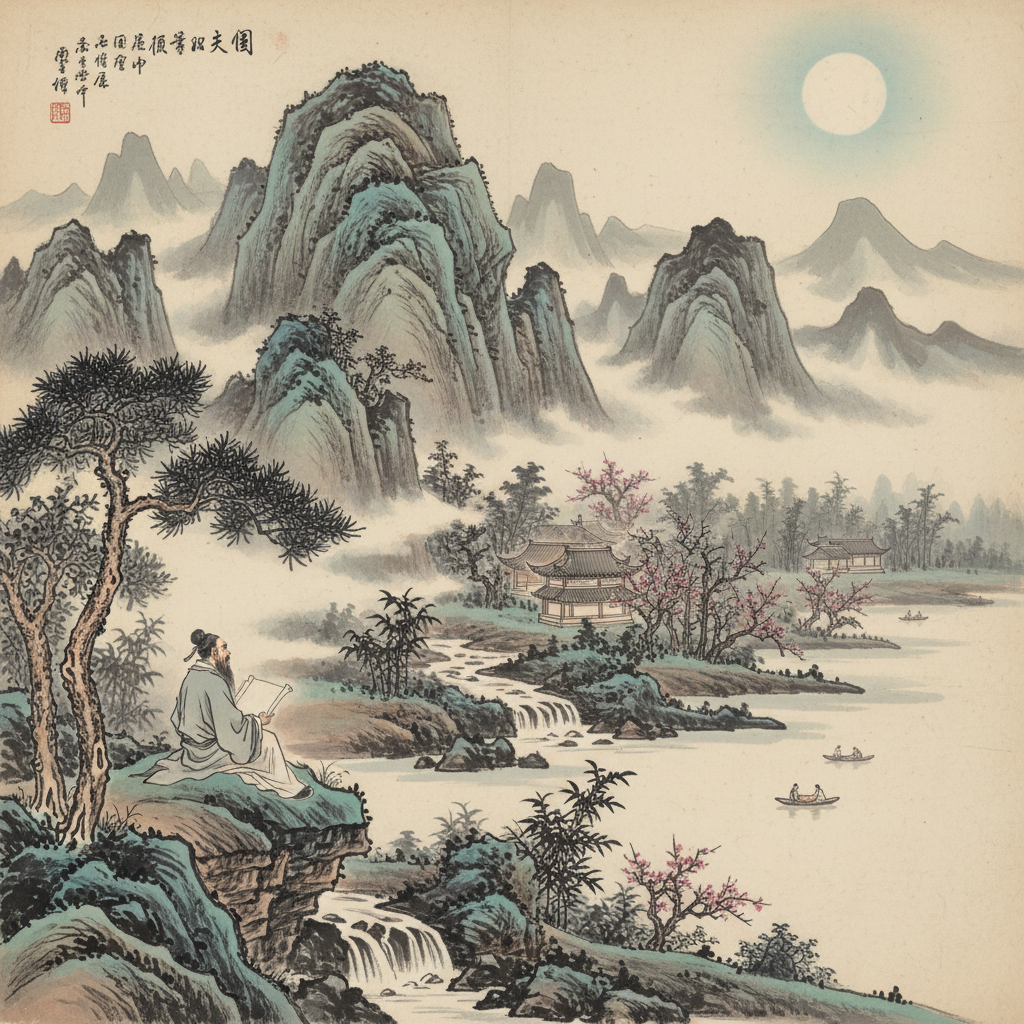
Introduction: Nature’s Enduring Presence in Chinese Classical Poetry
Chinese classical poetry holds a unique place in world literature, revered for its elegant depiction of human emotions intertwined with the natural world. Among its many themes, nature poetry stands out as a vibrant and symbolic tradition. Across the Tang, Song, and Yuan dynasties—periods considered the golden ages of Chinese poetry—poets used nature as both subject and metaphor to express philosophical insights, personal feelings, and societal observations. This article explores how nature poetry flourished in these dynasties, examining notable poets and their work within historical and cultural frameworks.
Historical Context: Tang, Song, and Yuan Dynasties’ Literary Landscape
The Tang dynasty (618–907) is often heralded as the pinnacle of Chinese poetry. It was a time of political stability, cultural flourishing, and cosmopolitan exchange, which nurtured poetic innovation. The Tang poets, including giants like Li Bai and Du Fu, elevated the portrayal of landscapes, seasons, and natural phenomena, associating them with broader existential themes.
Following Tang’s decline, the Song dynasty (960–1279) inherited this rich literary legacy but introduced a more introspective and scholarly tone. Song poets often combined nature imagery with philosophical reflections influenced by Confucianism, Buddhism, and Daoism, emphasizing personal cultivation and moral integrity. Su Shi and Huang Tingjian stand out as influential figures from this era.
The Yuan dynasty (1271–1368), despite political upheavals under Mongol rule, witnessed a vigorous poetic culture as well. Yuan poets revitalized classical forms and brought innovation through the dramatic “zaju” poetry format, often embedding natural imagery into layered social commentary. Ma Zhiyuan is a well-known Yuan poet whose work reveals the era’s aesthetic sensibilities.
Symbolism and Themes: Nature as Metaphor and Medium
Nature in Chinese classical poetry is rarely just an external setting; it serves as a symbolic language. Mountains, rivers, flowers, moonlight, and seasons carry complex connotations. For example, plum blossoms symbolize resilience in hardship, reflecting stoic virtue; falling leaves may evoke impermanence and melancholy.
Tang poets frequently depicted grand vistas and natural wonder to invoke awe and transcendence. Li Bai’s celebrated poems often portray himself communing with the moon or wandering remote mountains, suggesting spiritual freedom beyond worldly constraints. In contrast, Du Fu used nature to emphasize human suffering and social responsibility, associating natural disasters or barren landscapes with turmoil.
Song poetry continues this tradition but with a distinct emphasis on subtlety and introspection. Poets like Su Shi drew inspiration from the serene beauty of lotus ponds or autumnal forests to meditate on fleeting time and personal loss. The integration of nature imagery with intellectual and emotional depth marks the Song style.
Yuan dynasty poetry, influenced by the hardships of Mongol rule, often uses nature ironically or nostalgically. Ma Zhiyuan’s famous ci poem “Autumn Thoughts” employs desolate autumn scenes to evoke sorrow and alienation, resonating with the experience of national dislocation. Thus, nature imagery functions both as a refuge and a commentary on reality.
Literary Techniques: Imagery, Structure, and Aesthetic Devices
Chinese classical nature poetry is renowned for its precision of imagery and stylistic elegance. Tang poets favored the regulated verse (lüshi) and quatrain (jueju) forms, which helped condense vivid scenes into concise yet evocative expressions—capturing fleeting moments with crystal clarity. The use of parallelism and tonal patterns also brought musicality to their descriptions.
Song poets innovated lyrical ci forms, which paired natural images with personal emotions in a flexible tonal pattern. They also excelled in “nature-as-meditation” poetry, using straightforward diction infused with philosophical resonance. Metaphor and allusion play crucial roles in layering meanings in poems about landscapes or seasonal changes.
Yuan poets contributed to theatrical poetry and dramatic monologues, wherein nature elements are woven into narrative and emotional expression. This period also intensified the melancholic and nostalgic use of nature imagery. Across all three dynasties, poets employed the “show, don’t tell” technique—painting scenes that invite readers to infer feelings through the environment rather than explicit statements.
Cultural Significance: Nature Poetry’s Role in Society and Philosophy
Nature poetry in Chinese classical tradition transcends aesthetics; it bridges poetry with philosophical and spiritual thought. Confucian respect for order and harmony, Daoist celebration of natural spontaneity, and Buddhist notions of impermanence all inform poetic representations of nature.
During these dynasties, poets were often scholar-officials whose writings reflected personal morals and social ideals. Their nature poems became a medium to cultivate character, express political ideals indirectly, or find solace amid adversity. Poetry gatherings and imperial patronage supported the genre’s growth as both elite art and public discourse.
The enduring appeal of nature poetry has also influenced later literati and modern readers, who continue to find inspiration in its synthesis of sensory beauty and philosophical depth. It remains a vital entry point for appreciating Chinese classical literature and understanding China’s cultural worldview.
Conclusion: The Legacy of Nature in Chinese Classical Poetry
Tang, Song, and Yuan poets crafted an unparalleled tradition of nature poetry that remains vibrant today. Their work not only captures natural beauty but also enriches human experience through layered symbolism and refined artistry. By appreciating the historical context, themes, and literary techniques underlying their poems, we gain insight into a culture where nature and humanity are inseparable threads in the fabric of poetic expression. This timeless legacy invites us to pause, reflect, and connect with the natural world through the eloquence of classical Chinese verse.