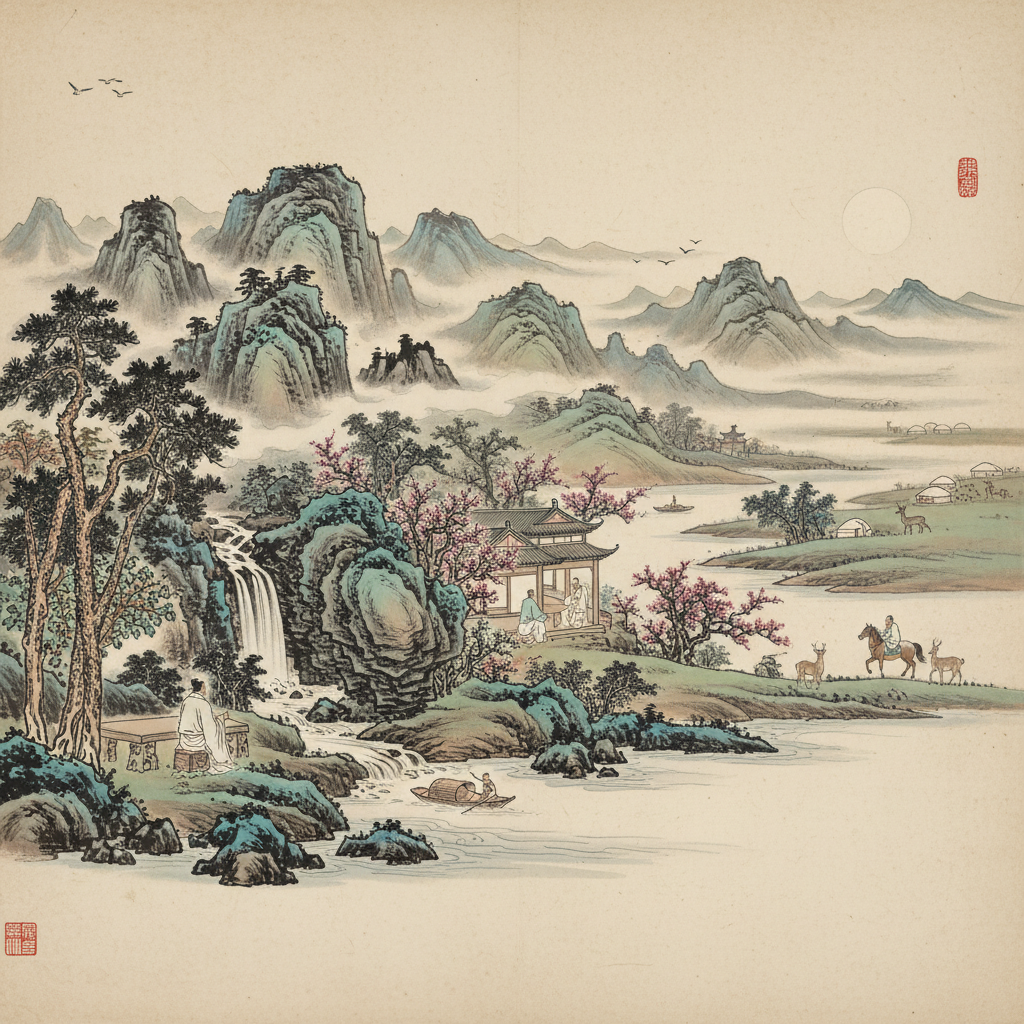
The Rich Legacy of Chinese Classical Poetry
Chinese classical poetry, particularly from the Tang (618-907), Song (960-1279), and Yuan (1271-1368) dynasties, stands as an enduring legacy, showcasing the profound interaction between humanity and nature. Poets during these dynasties expressed artistry that went beyond mere aesthetics; they captured the spirit of the natural world, reflecting the socio-political climate of their times. By analyzing selected works from canonical poets, we can gain insight into the cultural significance and historical context that shaped this literary tradition.
Nature as a Central Theme
The portrayal of nature is a hallmark of Chinese poetry, especially in the Tang dynasty. Poets such as Wang Wei and Li Bai often drew inspiration from the landscapes around them. Wang Wei, known for his serene and contemplative style, fused visual imagery with philosophical depth in his poem "Deer Park," where he invites readers into a tranquil environment that reflects a Zen-like detachment from worldly concerns. In this work, nature serves not merely as a backdrop but as a character that interacts intimately with the poet, representing peace and enlightenment.
Li Bai, often referred to as the "Poet Immortal," infuses his poems with passionate imagery of nature, using it as a catalyst for exploring deeper existential themes. In his enduring work "Quiet Night Thoughts," the poet's longing for home is poignantly intertwined with a moonlit scene, symbolizing connection and nostalgia. Nature thus becomes a vehicle for emotional expression, transcending time and revealing the universal human experience.
The Song Dynasty: Refinement and Subtlety
The Song dynasty witnessed a shift towards a more refined and subtle approach to poetry. Poets of this era, including Su Shi and Li Qingzhao, emphasized emotional introspection and a nuanced engagement with nature. Su Shi, for instance, often integrated his philosophical musings into depictions of the natural world. His poem "The Red Cliff" reflects a deep appreciation for the beauty of rivers and mountains while grappling with the passage of time and the inevitability of change.
Li Qingzhao, one of the most renowned female poets of the Song dynasty, used nature as a means to articulate personal grief and longing. Her vivid descriptions in “A Poem of Mourning” convey a melancholic connection to the changing seasons, symbolizing the transitory nature of life and love. The delicate interplay between earthly beauty and human emotions showcases the poets' sophisticated understanding of nature as both a mirror and a muse.
Yuan Dynasty: Dramatic Landscapes and Human Despair
The Yuan dynasty, marked by the dominance of the Mongol Empire, introduced a unique voice into the realm of classical poetry. The poets of this era often faced social and political upheaval, which influenced their perception of nature. The dramatics of human despair are poignantly depicted in the works of poets like Zhang Yanghao and Guan Hanqing, who captured the tumult of their times through striking natural imagery.
In Zhang Yanghao's poetry, lush landscapes often contrast with themes of loss and alienation. His use of vivid metaphors and surreal imagery serves to heighten the emotional gravity of his reflections on human existence. This period boldly expanded the thematic scope of nature poetry to include darker, more complex emotions, portraying the natural world as both a haven and a witness to the human plight.
Cultural Significance and Enduring Legacy
The nature poetry of the Tang, Song, and Yuan dynasties collectively represents a rich tapestry of emotional depth and cultural context. This tradition is not merely about an aesthetic appreciation of landscapes; it embodies a philosophical discourse that reflects humanity's place within the universe. Nature serves as a medium through which poets convey their thoughts, aspirations, and existential dilemmas.
Chinese classical poetry has influenced countless literary forms worldwide, inspiring contemporary poets to explore similar themes of connection, identity, and the human spirit in relation to nature. Works from this era continue to be celebrated in modern literary discussions, providing insights into not only the past but also the human experience across cultures and epochs.
Conclusion: Nature as an Eternal Muse
In summary, nature plays a pivotal role in the poetry of the Tang, Song, and Yuan dynasties, serving as a source of inspiration and reflection for poets. Each poet's relationship with the natural world reveals nuanced insights into the human condition, infusing classical Chinese poetry with a sense of timeless relevance. To explore these works is to embark on a journey through history, culture, and the enduring human spirit, forever intertwined with the beauty of the natural realm.