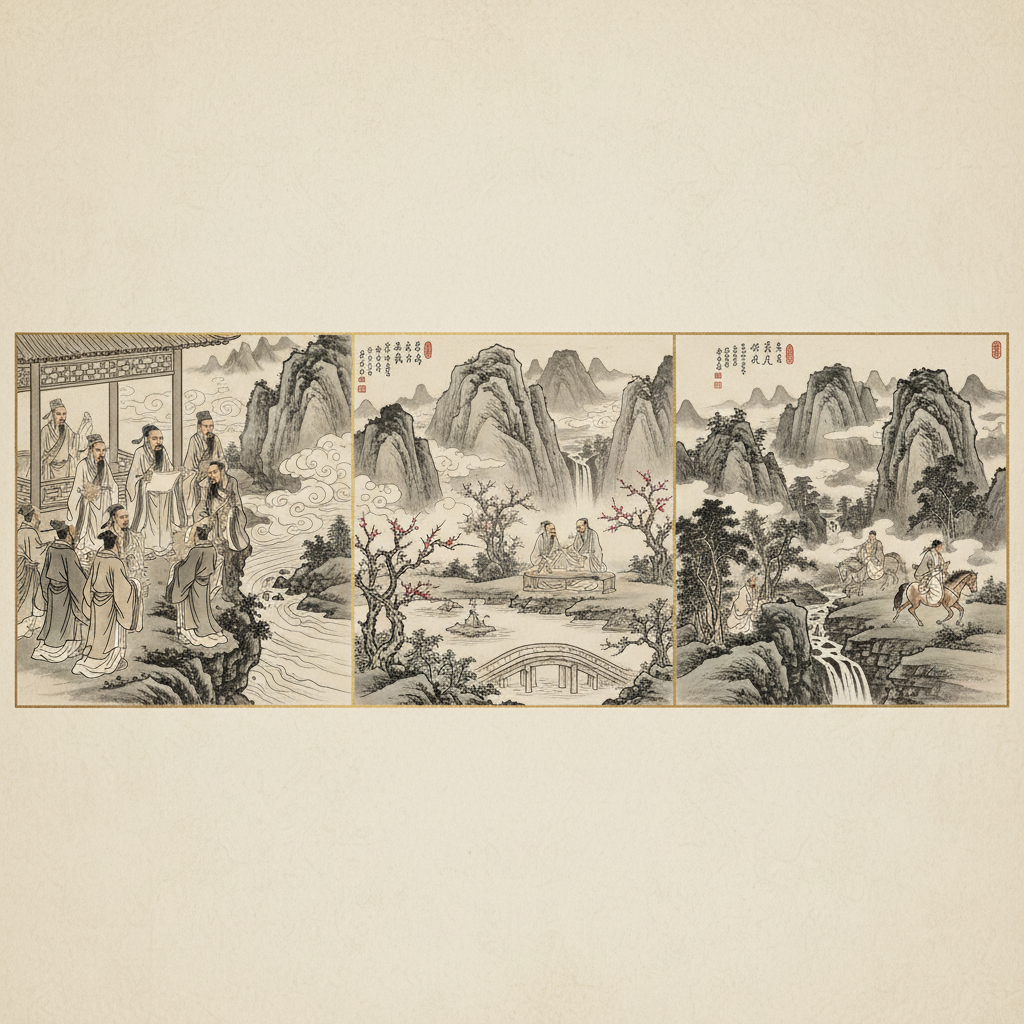
The Historical Context of Chinese Classical Poetry
Chinese classical poetry flourished during the Tang (618-907), Song (960-1279), and Yuan (1271-1368) dynasties, each period offering distinct styles and thematic nuances. The Tang dynasty is often hailed as the golden age of Chinese poetry, epitomized by a spirit of openness and cultural exchange facilitated by trade along the Silk Road. This era cultivated remarkable poets like Li Bai and Du Fu, whose works reveal a deep engagement with both personal emotion and vast philosophical inquiry.
In contrast, the Song dynasty shifted focus from the grandiose to the intimate, fostering a more personal and reflective style. It was during this time that the lyric form, particularly ci poetry, gained prominence. Poets such as Su Shi and Li Qingzhao explored love, loss, and the nuances of daily life, shaping a distinctive lyrical tradition.
The Yuan dynasty, meanwhile, marked a period of innovation with the introduction of zaju and qu, forms that blended poetry and drama. The luminary Guan Hanqing and his peers infused traditional poetry with social commentary, reflecting the complexities of a society undergoing significant change.
Cultural Significance of Tang, Song, and Yuan Poetry
Chinese classical poetry not only serves as an artistic expression but also plays a pivotal role in the cultural identity of China. The Tang dynasty left a legacy that continues to inspire modern poetry and music. The social ethos of the time valued education and poetic mastery, with poetry contests being a prevalent practice among scholars. This established poetry as a critical component of the civil examination system, further embedding it in the fabric of Chinese culture.
The Song dynasty's poetry often aligned with the Confucian ideals of harmony and the cultivation of virtue. Poets used their work to respond to the changing socio-political landscape, making their verses a vehicle for philosophical discourse. Notably, Su Shi's writings not only convey personal feelings but also address broader societal issues, from governance to nature, revealing the poet as both an artist and a thinker.
Yuan poetry, with its theatrical components, reflects the struggles of ordinary people and critiques social hierarchies. This form of poetic expression democratized literature, making it more accessible and relatable. The poetry of this period frequently addressed the conflict between personal desires and societal constraints, showcasing a profound understanding of human emotions.
Notable Poets of the Tang Dynasty
Li Bai: The Immortal Poet
Li Bai (701-762), often referred to as the "Immortal Poet," is celebrated for his spirited and bold imagery. His works often explore themes of nature, escapism, and the joys of wine, reflecting his free-spirited personality. Li Bai's innovative use of language and form often elevates ordinary experiences into profound reflections. His poem "Quiet Night Thoughts," for instance, beautifully captures the melancholy of longing and homesickness, resonating with readers across centuries.
Du Fu: The Poet Sage
In stark contrast, Du Fu (712-770) embodies the role of the conscientious observer. His poetry transitions from personal musings to socially aware commentary, addressing the tragedies of war and the plight of the common people. Du Fu's ability to blend personal experience with grand historical narratives enriches his poetry, making him a revered figure in Chinese literary history.
Song Dynasty Poets and Their Lyrical Innovations
Su Shi: The Multifaceted Genius
Su Shi (1037-1101) stands out as a poet, essayist, calligrapher, and statesman. His versatility is reflected in his poetry, which navigates between humor and profound melancholy. Su's ci poems, especially, exhibit an emotional depth and clarity, often inspired by his love for nature and the complexity of human emotions. "Red Cliffs" is a quintessential piece, intertwining historical reflection with personal sentiment.
Li Qingzhao: The Voice of a Woman
Li Qingzhao (1084-1155) is one of the most renowned female poets in Chinese history. Her work portrays the delicate balance between love and loss, often woven with rich imagery and emotional resonance. Her ability to capture the female experience through poetry while navigating the socio-political constraints of her time makes her an enduring figure in literature.
The Yuan Dynasty: A Shift Towards Theater and Social Commentary
The Yuan dynasty introduced a shift from strictly poetic forms to a blend of poetry and drama, seen in zaju and qu. Poets like Guan Hanqing utilized satire and charm to comment on social issues, creating works that resonated with the experiences of everyday people. This period marked an evolution in thematic exploration, allowing poetry to serve as both entertainment and social critique.
Conclusion: The Enduring Legacy
The poetry of the Tang, Song, and Yuan dynasties continues to resonate deeply within Chinese culture and beyond. These eras not only shaped poetic forms but also created an enduring discourse on human emotion, society, and existence. The ability of these poets to capture the essence of their times, while exploring universal themes, ensures that their works remain relevant, inspiring countless readers and writers even today. Through a harmonious blend of personal reflection and cultural commentary, Chinese classical poetry emerges as a timeless art form, reflecting the depths of the human experience across centuries.