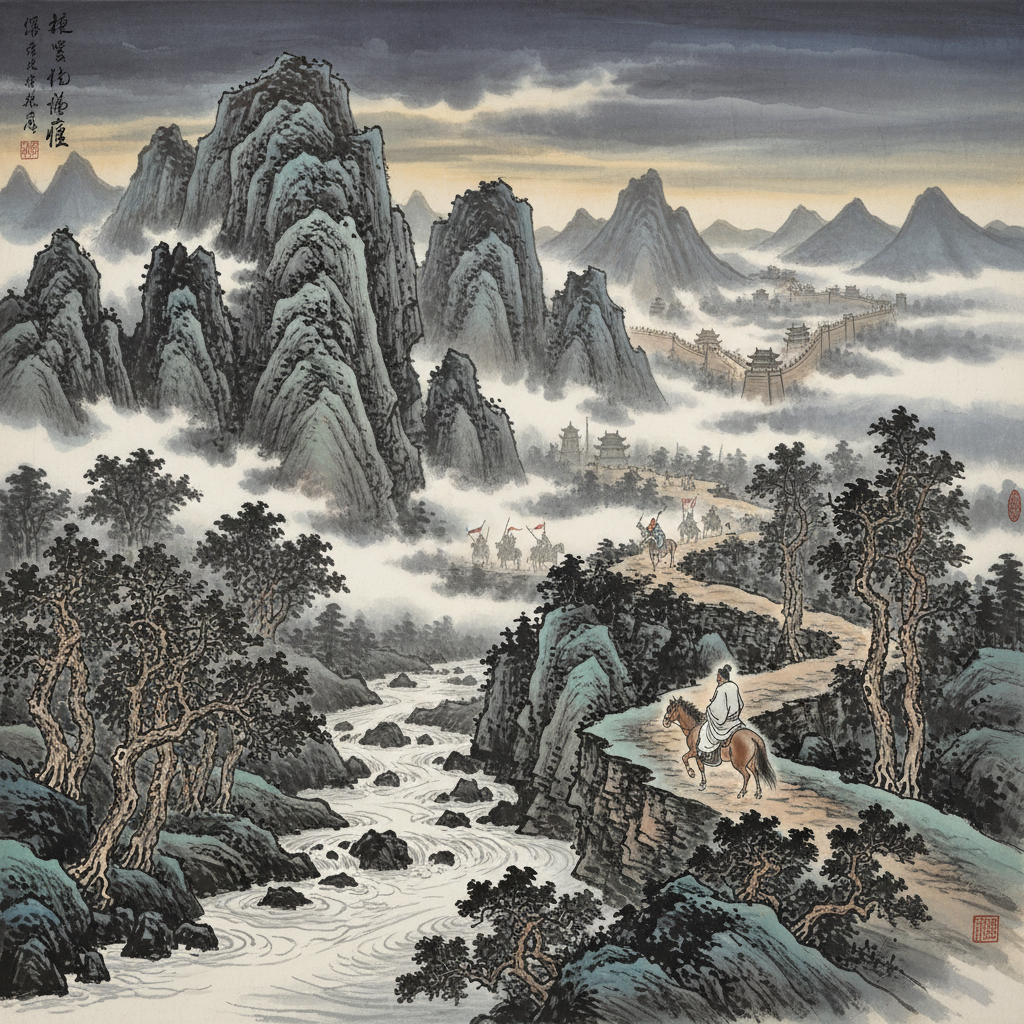
The Historical Context of Chinese War Poetry
Chinese classical poetry flourished during the Tang (618–907), Song (960–1279), and Yuan (1271–1368) dynasties, capturing the nation’s complex relationship with war and conflict. The repeated invasions, civil wars, and power struggles not only shaped the geopolitical landscape but also influenced the cultural ethos, particularly in poetry. War poetry emerged as a significant genre, allowing poets to articulate their reflections on violent struggles, losses, and the human condition.
The Tang dynasty is often regarded as the golden age of Chinese poetry, with poets such as Li Bai and Du Fu paving the way to explore themes of heroism, duty, and the tragic consequences of war. The Song dynasty followed, characterized by a more introspective approach to poetics, with poets like Su Shi using war as a backdrop to convey deeper philosophical musings. By the time of the Yuan dynasty, war poems often expressed a longing for peace in the face of Mongol invasions, while incorporating vivid imagery and personal sentiments.
Renowned Poets and Their Works
Among the constellation of poets in Chinese history, a few stand out with their war-related themes and contributions to the literary landscape.
Li Bai: The Romantic Warrior
Li Bai (701-762), known for his romantic and free-spirited poetry, often explored the concept of heroism through the lens of war. His famous poem "The Ballad of Mulan" captures the valor of women who took arms for their country, transcending traditional gender roles. His approach is marked by vivid imagery and emotional intensity, reflecting both a personal connection to war and broader national themes.
Du Fu: The Poet Historian
In stark contrast, Du Fu (712-770) adopted a more somber tone. His poignant poems often reflect the harsh realities of war. In "The Song of the War Chariot," Du Fu illustrates the suffering of soldiers and civilians alike, intertwining personal grief with deep social commentary. His work is celebrated for its moral awareness, and it captures the devastating toll of conflict on society, serving as a critique of the political systems of his time.
Su Shi: War and Wisdom
Transitioning to the Song dynasty, Su Shi (1037-1101) used war as a backdrop for exploring philosophical ideas in his poetry. His poem "Fallen Leaves" symbolizes the inevitable passage of time and the transitory nature of life amidst constant warfare. Su Shi’s ability to intertwine personal and political themes demonstrates the interplay between intellect and emotion, emphasizing the importance of wisdom in times of conflict.
Literary Analysis: Themes and Techniques
The literary techniques employed in war poetry of the Tang, Song, and Yuan dynasties reveal a lot about the poets' sentiments and societal concerns.
Cultural Symbolism
Many poets employed vivid landscapes and natural imagery to juxtapose the horrors of war with the beauty of the natural world. This technique serves not only to emphasize the tragedy of human conflict but also to evoke an emotional response from the reader. For instance, Li Bai often uses metaphors drawn from nature to reflect the turmoil within the human spirit, while Su Shi’s depictions of changing seasons parallel the cyclical nature of war and peace.
Emotional Resonance
The emotional depth in these poems allows readers to empathize with the experiences of soldiers and victims. Du Fu’s heart-wrenching depictions of war's impact demonstrate how poetry can serve as a vessel of collective memory, preserving the anguish felt by those who lived through the conflicts. This resonance continues to echo through history, making this genre impactful and relevant.
Cultural Significance and Legacy
Chinese war poetry serves not only as an artistic expression but as a commentary on the socio-political climate of the times. It provides insight into the minds of individuals who lived through tumultuous periods, fostering a deeper understanding of historical events and their implications.
The enduring legacy of these poets can still be seen in modern literature and art, influencing the ways in which contemporary societies engage with and interpret the experience of war. As an integral part of Chinese cultural identity, these poems remind us of the importance of remembering history, revealing the human experience behind the facades of glory and valor.
Conclusion: The Continued Relevance of War Poetry
The war poetry of the Tang, Song, and Yuan dynasties serves as a profound reminder of the struggles faced by individuals during periods of conflict. Through their poignant words, poets like Li Bai, Du Fu, and Su Shi tackled challenging themes of heroism, loss, and the quest for peace. As we explore their works, we uncover not only the historical context but also the universal themes that continue to resonate through the ages—an enduring testament to the power of poetry in illuminating the human experience.