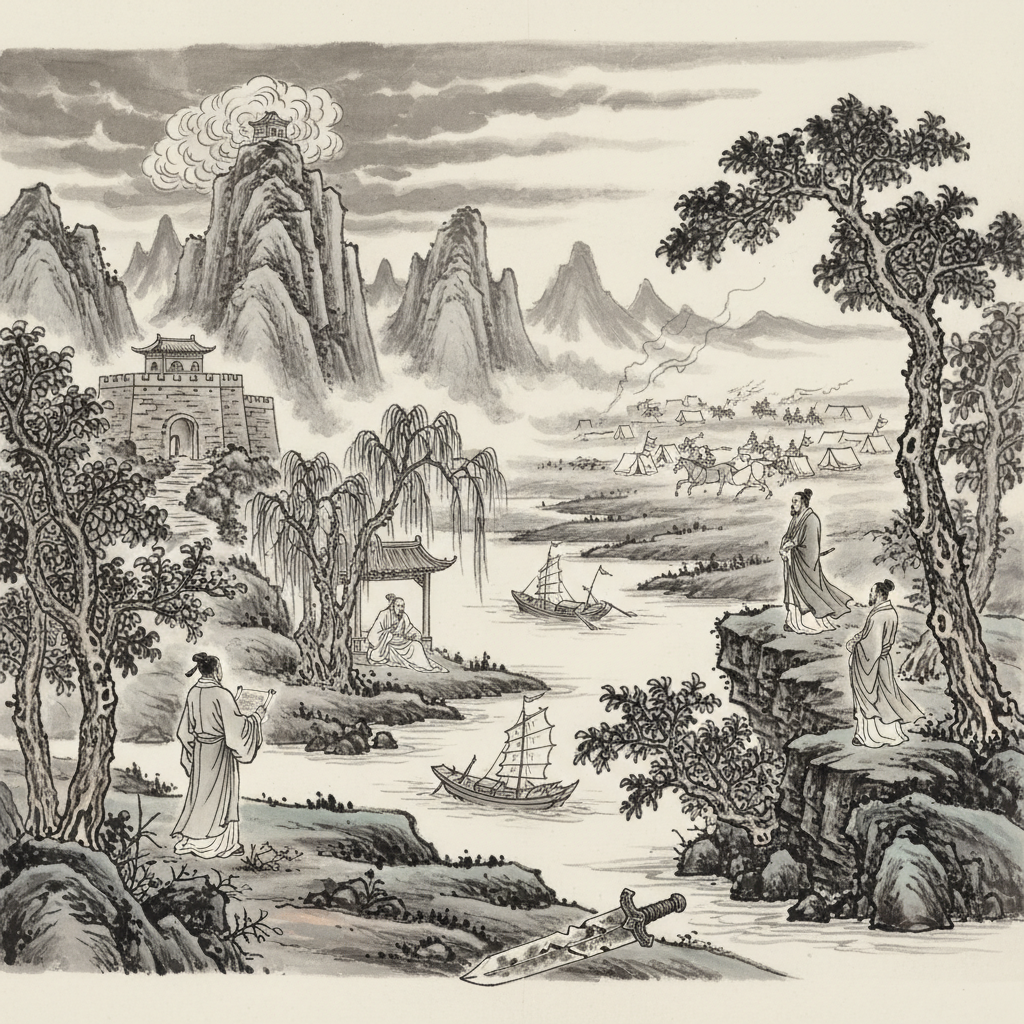
The Historical Context of War Poetry in China
Chinese classical poetry is steeped in rich historical narratives, intricately woven into the fabric of its cultural identity. Particularly during the Tang (618-907 AD), Song (960-1279 AD), and Yuan (1271-1368 AD) dynasties, poetry became a powerful medium for expressing personal sentiments and collective experiences, particularly in times of conflict. These eras were marked by territorial expansion, political intrigue, and upheaval, providing fertile ground for poets to explore themes of war.
The Tang dynasty saw the consolidation of imperial power and the flourishing of literary arts, a period when military campaigns often influenced societal dynamics. Similarly, the Song dynasty, despite its more domestic focus, experienced external pressures such as the invasions from the Jurchens and Mongols, reflecting a societal preoccupation with war. The Yuan dynasty, established by the Mongols, further complicated the narrative of conflict as native Chinese poets grappled with issues of identity and belonging amidst foreign rule.
Notable Poets and Their War-Inspired Works
Several poets from the Tang, Song, and Yuan dynasties created remarkable works that poignantly depict the themes of war and its aftermath. Among them is Wang Wei (701-761 AD), whose war poetry often intermingled with Bhuddhist philosophies. His poem "Deer Park" subtly alludes to the disillusionment and sorrow stemming from warfare, portraying a deep connection between nature and the human condition in times of conflict.
Another significant figure is Du Fu (712-770 AD), often regarded as one of the greatest poets in Chinese history. Dubbed the "Poet Sage," his wartime experiences during the An Lushan Rebellion profoundly influenced his work. His poem "Spring View" encapsulates the devastation and personal loss resulting from war, offering a vivid portrayal of suffering and resilience. Through poignant imagery, Du Fu illustrates the scars war leaves on both individuals and society.
From the Song dynasty, poets like Su Shi (1037-1101 AD) also penned works reflecting martial themes, albeit often with a more philosophical lens. His verses provided a counter-narrative to mere glorification of warfare, instead focusing on the moral dilemmas faced during conflict. The famous phrasing of "the cries for peace" resonates through his poetry, hinting at the universal yearning for solace amidst chaos.
The Literary Techniques Employed in War Poetry
War poetry from these dynasties showcases a range of literary techniques that not only enhance emotional depth but also resonate with readers on multiple levels. One prominent method is the use of imagery and symbolism; poets often employ natural elements to signify the turmoil of conflict. For instance, a wandering bird may symbolize a soldier's longing for home, while the withering of flowers can represent the fading of life amidst battle.
Additionally, poets adeptly utilize structures, such as regulated verse and free verse, to convey varied emotional landscapes. While strict forms might evoke the regimented nature of warfare, free verse can reflect the chaotic experiences of battle. Tone shifts play a crucial role as well, with poets oscillating between despair and hope, capturing the complex emotional atmosphere surrounding warfare.
The Cultural Significance of War Poetry
War poetry during the Tang, Song, and Yuan dynasties transcended mere artistic expression; it served as a historical record, revealing the collective psyche of the Chinese people. In a society where Confucian ideals often emphasized harmony, these works offered a counterbalance, allowing for the exploration of conflict and its ramifications. The voices of poets acted as channels through which societal concerns and personal trauma could be expressed, thus contributing to a richer cultural discourse.
Moreover, these poems have become vital in understanding the nuanced relationship between governance and the governed. They reflect the moral quandaries faced by individuals grappling with their roles in a militarized society, resonating with contemporary themes of duty, honor, and the costs of war. This cultural legacy continues to influence modern interpretations of conflict, shaping how narratives are constructed around war in both literature and society.
Conclusion: The Enduring Legacy of War Poetry
The complexities of war poetry from the Tang, Song, and Yuan dynasties illuminate significant themes that remain relevant today. By engaging with the works of poets like Wang Wei, Du Fu, and Su Shi, we gain insight into the emotional and moral landscapes shaped by conflict. Their poetic expressions stand as testaments to the resilience and artistic genius of a culture grappling with the consequences of war.
As we reflect on these literary masterpieces, we recognize their timeless ability to evoke empathy and understanding across generations, reminding us of the shared human experiences that transcend borders and epochs. These poets remind us that in the heart of turmoil lies an opportunity for reflection, growth, and ultimately, healing.