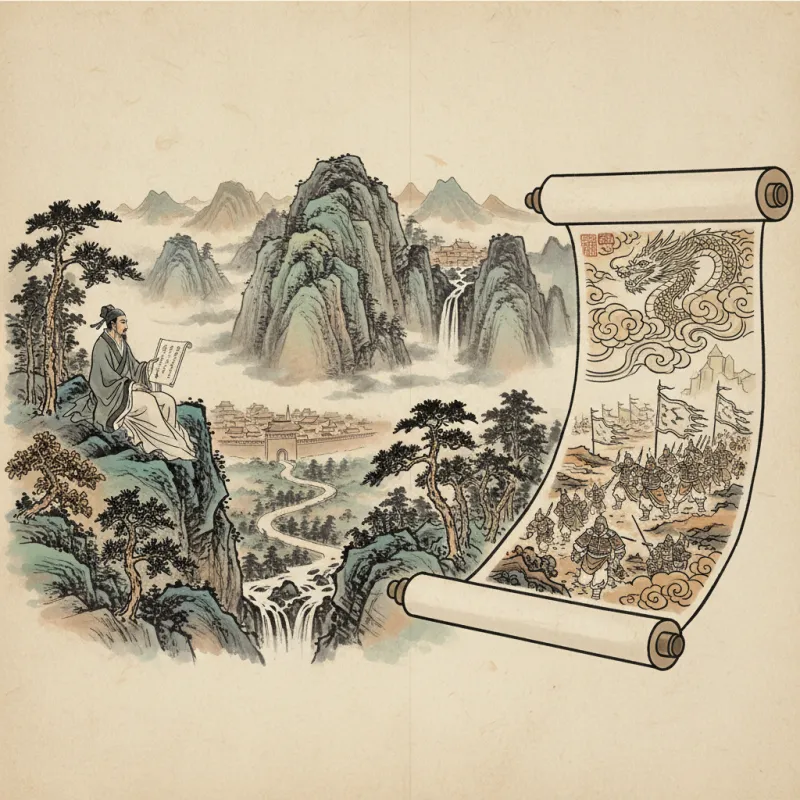
Every general who's lost a war thought they understood Sun Tzu. The Confederate strategists quoted him. Napoleon's marshals studied him. Hitler's generals annotated him. They all lost anyway. The problem wasn't that they misread the Art of War (孙子兵法 Sūnzǐ Bīngfǎ) — it's that they read it looking for permission to fight, when Sun Tzu spent 6,000 characters explaining why you shouldn't.
What Sun Tzu Actually Said (And Why Nobody Listens)
The opening line of the Art of War is 兵者,国之大事 (bīng zhě, guó zhī dà shì) — "War is a grave matter of state." Not an opportunity. Not a test of manhood. Not a path to glory. A grave matter. Sun Tzu, writing sometime between 544-496 BCE during the Spring and Autumn period, watched the Zhou Dynasty collapse into warring states and concluded that most conflicts were catastrophically stupid. His book is essentially 13 chapters of "please don't do this unless you absolutely must, and if you must, here's how to end it quickly."
The most famous line — 不战而屈人之兵,善之善者也 (bù zhàn ér qū rén zhī bīng, shàn zhī shàn zhě yě) — translates to "to subdue the enemy without fighting is the supreme excellence." Modern readers skip past this to get to the tactical bits about terrain and deception. But Sun Tzu placed this principle in Chapter 3, Offensive Strategy, right after explaining the economics of war. He'd just calculated that a prolonged campaign bankrupts states, exhausts populations, and creates opportunities for rival powers. His conclusion: if you're fighting, you've already failed at strategy.
This isn't pacifism. It's ruthless pragmatism. Sun Tzu advocates for intelligence networks, psychological warfare, diplomatic isolation, and economic pressure — anything that achieves political objectives without the unpredictable chaos of battle. When the Duke of Wu asked him to demonstrate his methods, Sun Tzu famously trained the duke's concubines into a disciplined unit and executed two of the duke's favorites when they giggled during drills. The point wasn't cruelty; it was that discipline and preparation matter more than courage or numbers.
The Five Factors That Determine Everything
Sun Tzu's analytical framework begins with five constant factors (五事 wǔ shì): the Way (道 dào), Heaven (天 tiān), Earth (地 dì), Command (将 jiàng), and Method (法 fǎ). These aren't mystical concepts — they're a checklist for strategic assessment that predates modern military doctrine by 2,500 years.
The Way refers to moral alignment between leadership and population. Can you mobilize your people? Will they follow you into danger? Sun Tzu observed that states with internal cohesion defeat larger, fractured opponents. This principle appears throughout Chinese strategic thought, from Zhuge Liang's southern campaigns to Mao's guerrilla doctrine. It's why understanding the Mandate of Heaven matters for reading Chinese military texts — legitimacy is a weapon.
Heaven means timing and conditions. Sun Tzu lists weather, seasons, and natural cycles. Modern readers interpret this broadly: market conditions, political climate, technological trends. The Vietnamese general Vo Nguyen Giap, who studied Sun Tzu extensively, timed the Tet Offensive for the lunar new year when South Vietnamese forces would be on leave. He lost the tactical battle but won the strategic war by understanding Heaven.
Earth is terrain — both literal geography and the operational environment. Sun Tzu categorizes six types of terrain and explains how each dictates tactics. Accessible ground favors whoever arrives first. Entangling ground is easy to enter but hard to exit. Desperate ground, where survival requires victory, transforms ordinary soldiers into heroes. The Pacific theater in World War II validated every one of Sun Tzu's terrain principles, from island-hopping campaigns to the desperate defense of Iwo Jima.
Command and Method cover leadership qualities and organizational systems. Sun Tzu wants generals who are wise, trustworthy, benevolent, courageous, and strict — a combination so rare that most dynasties produced maybe one or two per century. Method means logistics, communications, and supply chains. Boring stuff. Also the reason Rome conquered the Mediterranean and Napoleon conquered Europe. Sun Tzu understood that tactics are downstream from logistics.
Deception, Intelligence, and the Spy Network
Chapter 13, The Use of Spies, is the longest chapter in the Art of War and the most ignored by casual readers. Sun Tzu advocates for five types of intelligence agents: local spies (recruited from enemy territory), inside spies (enemy officials), double agents (enemy spies turned), expendable spies (fed false information to leak), and living spies (who return with intelligence). He recommends paying them lavishly. 故三军之事,莫亲于间 (gù sān jūn zhī shì, mò qīn yú jiàn) — "Of all military matters, none should be more intimate than espionage."
This obsession with intelligence reflects Sun Tzu's core belief: knowledge eliminates uncertainty, and uncertainty causes defeat. He wants you to know the enemy's plans, supply situation, morale, leadership conflicts, and strategic objectives before engaging. Modern militaries call this "intelligence preparation of the battlefield." Sun Tzu called it common sense.
The emphasis on deception follows naturally. If intelligence reveals enemy intentions, deception conceals yours. 兵者,诡道也 (bīng zhě, guǐ dào yě) — "All warfare is based on deception." Appear weak when strong, strong when weak, near when far, far when near. Create false targets. Spread disinformation. Make the enemy see what you want them to see. The entire Chinese strategic tradition, from the Thirty-Six Stratagems to modern PLA doctrine, builds on this foundation.
Why Generals Ignore the Best Advice
Sun Tzu's most practical advice is also his most ignored: 知彼知己,百战不殆 (zhī bǐ zhī jǐ, bǎi zhàn bù dài) — "Know the enemy and know yourself; in a hundred battles you will never be defeated." The second part matters more: know yourself. Assess your actual capabilities, not your imagined ones. Understand your weaknesses. Recognize when you're outmatched.
Generals hate this advice because it requires humility. It means admitting that your army might not be ready, your plan might be flawed, your intelligence might be wrong. It means sometimes the right decision is to not fight, to withdraw, to wait. Sun Tzu explicitly states that there are roads not to take, armies not to attack, cities not to besiege, and commands from the ruler not to obey. A general who follows suicidal orders is not loyal — he's incompetent.
The historical record supports Sun Tzu's pessimism about human nature. The Battle of Cannae happened because Roman consuls ignored intelligence about Hannibal's position. The Charge of the Light Brigade happened because British commanders didn't verify orders. The Bay of Pigs happened because planners assumed success without testing assumptions. In each case, someone had read Sun Tzu. They just thought the rules didn't apply to them.
The Modern Misapplication Problem
Corporate executives love quoting Sun Tzu because it makes them sound strategic. "All warfare is based on deception" becomes justification for misleading competitors. "Appear weak when you are strong" becomes advice for underselling your startup's traction. "Attack where the enemy is unprepared" becomes "disrupt the market."
This is cargo cult strategy. Sun Tzu's principles work in zero-sum conflicts where one side's gain is another's loss, where deception is expected, and where the objective is to impose your will on an opponent. Business is rarely zero-sum. Markets expand. Partnerships create value. Reputation matters across repeated interactions. Applying military strategy to business is like using a sword to perform surgery — technically possible, but you'll kill the patient.
The dating advice applications are even worse. "Keep her guessing" is not what Sun Tzu meant by deception. "Strike when she's vulnerable" misunderstands the entire concept of strategic timing. If you're treating relationships as warfare, you've already lost — just not in the way you think.
The useful modern applications come from understanding Sun Tzu's analytical framework, not copying his tactics. Assess the five factors before committing resources. Gather intelligence before making decisions. Understand your actual capabilities versus your imagined ones. Recognize when not fighting is the winning move. These principles transfer because they're about clear thinking under uncertainty, not about ancient Chinese battlefield tactics.
Reading Sun Tzu in Context
The Art of War emerged from the Spring and Autumn period (770-476 BCE), when the Zhou Dynasty's collapse created dozens of competing states. Warfare was constant, brutal, and economically devastating. Sun Tzu wrote for rulers who needed to survive in this environment without bankrupting their states or depopulating their territories. His advice reflects this context: be efficient, be decisive, avoid prolonged campaigns, and win through superior preparation rather than battlefield heroics.
Comparing Sun Tzu to other military classics reveals his distinctive approach. Clausewitz's On War treats battle as the central act of warfare and accepts friction and uncertainty as inherent. Sun Tzu wants to eliminate uncertainty through intelligence and avoid battle through superior positioning. The Seven Military Classics (武经七书 Wǔjīng Qīshū), compiled during the Song Dynasty, include the Art of War alongside texts like the Methods of the Sima and Three Strategies of Huang Shigong, showing how Chinese military thought evolved while maintaining Sun Tzu's core principles.
The best way to read the Art of War is slowly, with historical context, and with skepticism about modern applications. The Lionel Giles translation (1910) remains readable and accurate. Samuel Griffith's version (1963) includes helpful historical notes. Avoid translations that add modern business commentary or self-help framing — they're selling you something Sun Tzu never wrote.
What Sun Tzu Got Wrong
Sun Tzu assumed rational actors making calculated decisions based on available information. He didn't account for ideology, religious fervor, or leaders who prefer glorious defeat to pragmatic survival. His framework struggles with conflicts where the objective isn't territory or resources but identity, belief, or revenge. The Crusades, the Thirty Years' War, and modern insurgencies don't fit his model because the participants aren't trying to minimize costs — they're trying to prove something.
He also underestimated technological disruption. Sun Tzu's principles assume relatively stable military technology where superior strategy and preparation determine outcomes. But gunpowder, railroads, aircraft, and nuclear weapons changed warfare in ways that make some of his tactical advice obsolete. You can't "appear weak when strong" when satellites photograph your troop movements. You can't "strike where unprepared" when early warning systems detect missile launches.
The enduring value of the Art of War isn't in its specific tactics but in its analytical approach: assess carefully, prepare thoroughly, fight only when necessary, and win through superior positioning rather than superior violence. These principles survive technological change because they're about thinking clearly under pressure, not about specific weapons or formations.
Most people who quote Sun Tzu haven't read past Chapter 1. Most who've read the whole text haven't understood it. And most who've understood it recognize that its central message — don't fight unless you must, and if you must, end it quickly — is advice that every generation learns, forgets, and relearns at terrible cost. The Art of War remains relevant not because it teaches you how to win, but because it explains why most conflicts are mistakes that superior strategy could have avoided. That's a lesson worth 6,000 characters, even if nobody listens.
Related Reading
- The Four Great Classical Novels of Chinese Literature
- Zhuangzi's Butterfly Dream: The Most Famous Thought Experiment in Chinese Philosophy
- Ouyang Xiu and The Drunkard's Pavilion: Getting Drunk on Mountains
- Classical Chinese Prose: The Essays That Shaped a Civilization
- Xin Qiji: The Warrior Poet
- Discovering the Rich Legacy of Tang, Song, and Yuan Poetry
- Li Qingzhao: China's Greatest Female Poet
Explore Chinese Culture
- Explore the Tang dynasty's golden age
- Explore Daoist themes in classical poetry
- Explore Chinese literary traditions